How Vietnam Made Who I am.. And What Can You Learn From This
Do you ever wake up feeling like a passenger in your own life?
You open your eyes, reach for your phone, and the dread immediately washes over you. Another day, another commute, another endless cycle of checking boxes for someone else.
You are surviving, but you certainly are not thriving.
This is the exact suffocating loop I found myself trapped in just a few years ago. My soul felt completely bankrupt, and I knew I desperately needed a spark to wake me up.
That spark came in the form of a one-way ticket to Southeast Asia, igniting the most profound transformative travel experience of my entire life.
Vietnam didn’t just change my scenery; it completely shattered my worldview and rebuilt my identity from the ground up. The humid air, the chaotic streets, and the vibrant culture stripped away my ego.

In this ultimate guide, I am going to share exactly how this transformative travel experience reshaped my mind. More importantly, I will show you how to apply these exact psychological shifts to your own life right now.
You don’t need a passport to undergo this radical shift. You just need a pen, your journal, and the willingness to step into the unknown.
The Psychology Behind a Transformative Travel Experience
Why does stepping outside your comfort zone change your brain so drastically?
It all comes down to a neurological concept known as cognitive flexibility. When you are stuck in a daily routine, your brain operates on autopilot to conserve energy.
You take the same route to work, eat the same foods, and think the exact same thoughts. Over time, this creates deep, rigid neural pathways that make it nearly impossible to break bad habits.
If you are currently overcoming daily burnout, you know exactly how exhausting this rigid thinking can be.
A transformative travel experience violently disrupts this autopilot mode. Suddenly, everything is novel. The smells are foreign, the language is completely unrecognizable, and simple tasks like buying water require intense focus.
This flood of novelty triggers massive neuroplasticity in your brain. According to Psychology Today’s overview of neuroplasticity, your brain begins forming new connections at a rapid pace when exposed to unfamiliar environments.
You are literally forced to adapt, which shatters your rigid routines and opens your mind to new ways of living. This is why researchers featured in the Harvard Business Review consistently link multicultural experiences with increased creativity and problem-solving skills.
When you navigate a transformative travel experience, you experience the “Zeigarnik Effect” in reverse. Instead of obsessing over unfinished tasks at home, you become radically present in the moment.
Your brain learns that survival and happiness depend on being completely engaged with the “now.” I’ll show you exactly how to capture this powerful presence in your journal later in this guide.
But first, we must dive into the core lessons Vietnam taught me. We need to explore how you can harvest these psychological breakthroughs without ever leaving your hometown.
7 Steps to Forge Your Own Transformative Travel Experience
This is the core of your transformation.
I am going to break down the exact sensory experiences that shifted my mindset in Vietnam. Then, I will provide you with the exact psychological framework to apply these lessons to your own daily life.
Every single step is designed to mimic the neurological benefits of a transformative travel experience. Pay close attention to the journaling prompts, as they will be your primary vehicle for change.
Step 1: Embrace the Chaos (The Hanoi Traffic Method)
If you have ever stood on a street corner in Hanoi, you know true sensory overload.
Thousands of motorbikes weave together in a deafening, chaotic river of steel and exhaust. There are no stoplights, no crosswalks, and absolutely no breaks in the traffic.
To cross the street, you have to do the unthinkable: you just step out into the roaring swarm.
You cannot hesitate, you cannot run, and you cannot step backward. You must walk at a slow, predictable pace, trusting that the chaos will organically flow around you.
When I first did this, my heart hammered against my ribs. I was paralyzed by fear. But when I finally stepped off the curb, a profound realization hit me.
What You Can Learn: Life is a chaotic stream of unpredictable events, emails, demands, and crises. If you wait for the “traffic” to stop before you make a move, you will stand on the sidewalk forever.
A true transformative travel experience teaches you to step into the mess. You must learn to move forward with a steady, predictable pace, trusting that you can navigate the obstacles as they come.
Journaling Action: Write down one major life decision you are waiting for the “perfect time” to make. Map out the absolute smallest first step you can take today to step off the curb.

Step 2: Strip Away the Excess (The Backpacking Mindset)
Before my flight to Ho Chi Minh City, I packed my life into a single 40-liter backpack.
Everything I owned for the next six months rested heavily on my shoulders. Within three days, the oppressive Vietnamese heat made me realize I had packed way too much.
I started throwing away clothes, leaving behind gadgets, and shedding physical weight to survive the humidity. As my physical load lightened, my mental load miraculously did the same.
I realized how incredibly little I actually needed to be fundamentally happy.
What You Can Learn: You are carrying a massive, invisible backpack of mental clutter. You are hauling around other people’s expectations, toxic relationships, and outdated beliefs.
To spark a transformative travel experience in your soul, you must audit your mental baggage. You must aggressively discard anything that is weighing down your spirit.
Consider creating a minimalist journaling setup to physically practice this art of letting go.
Journaling Action: Draw a large backpack on a blank page. Inside it, write down all the obligations, fears, and toxic habits you are currently carrying. Cross out three things you are committing to “leave behind” today.

Step 3: Savor the Slow Drip (The Cà Phê Sữa Đá Ritual)
In the West, coffee is frantic fuel for the rat race.
We chug it from paper cups while aggressively responding to emails in traffic. But in Vietnam, coffee is a sacred, slow, and deliberate ritual.
They use a traditional “phin” filter, placing it over a glass containing a thick layer of sweetened condensed milk. You sit on a tiny plastic stool on the sidewalk and watch the dark liquid drip.
Drip. Drip. Drip.
You cannot rush the process, no matter how much of a hurry you are in. You simply have to sit, observe the street, and wait for gravity to do its work.
What You Can Learn: Your obsession with instant gratification is rotting your attention span and spiking your anxiety. According to a study published in PubMed on stress reduction, forced pauses significantly lower cortisol levels.
A true transformative travel experience forces you to slow down and accept the current moment. You must learn to find beauty in the waiting, rather than constantly rushing to the next milestone.
If you want to integrate this, try adding a slow, deliberate pause to your mindful morning routine.
Journaling Action: Tomorrow morning, make a cup of tea or coffee without looking at your phone. Write down five sensory details you noticed while you were forced to wait.

Step 4: Navigate the Language Barrier (Mastering Internal Dialogue)
When I arrived in the rural northern provinces, absolutely no one spoke English.
I had to rely entirely on frantic hand gestures, facial expressions, and pointing at pictures to survive. It was incredibly frustrating and isolating at first.
But it forced me to listen with my eyes and feel with my intuition. I had to become hyper-aware of energy, tone, and body language to communicate.
I realized that most of human connection happens completely outside of spoken words.
What You Can Learn: You likely have a severe communication barrier with yourself. Your internal dialogue is likely running a script of negative self-talk that you don’t even consciously hear.
To mimic the psychological shift of a transformative travel experience, you must start listening to your own non-verbal cues. Notice when your chest tightens, when your jaw clenches, or when your stomach drops.
Your body is desperately trying to communicate with you, but you are ignoring the translation. This is where shadow work journaling becomes an incredibly powerful tool for self-translation.
Journaling Action: Set an alarm for 3 PM tomorrow. When it goes off, do not write words. Instead, draw a stick figure and use colored pens to shade where you feel physical tension in your body.

Step 5: Ride the Open Road (The Ha Giang Loop Philosophy)
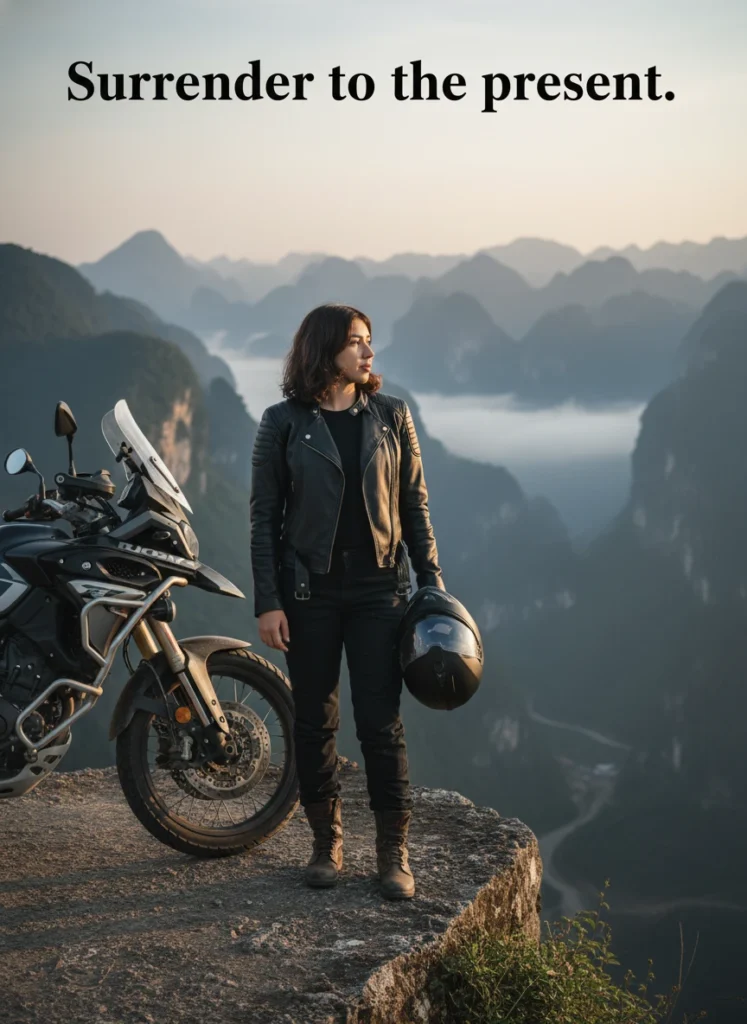
The most terrifying and exhilarating thing I did was ride a motorbike through the Ha Giang Loop.
These are sheer mountain passes with jagged limestone peaks, blind corners, and terrifying drop-offs. One wrong move, and the consequences would be fatal.
Yet, as the wind whipped past my face and the lush green valleys opened up below me, I felt an electrifying surge of pure freedom. I had to surrender completely to the present moment.
There was no room for past regrets or future anxieties. There was only the road, the bike, and the next turn.
What You Can Learn: You spend entirely too much time looking in the rearview mirror or agonizing over the destination. This prevents you from actually steering your life in the present.
A core component of a transformative travel experience is forced mindfulness through managed risk. You can cultivate this by intentionally doing things that scare you just enough to demand your full presence.
The Mayo Clinic supports this, noting that anchoring yourself in the present moment drastically reduces symptoms of depression and anxiety.
Journaling Action: Write down a detailed description of a moment today where you felt completely “in the zone” or fully present. What triggered it? How can you recreate that trigger tomorrow?
Step 6: Discover Beauty in the Scars (Healing Your Past)
Vietnam is a country that has endured unimaginable trauma and devastation.
Yet, when you walk through the streets, you don’t feel a lingering sense of victimhood or despair. You feel an incredible, vibrant resilience and a fierce focus on the future.
They acknowledge their history, they honor their scars, but they refuse to let the past paralyze their present. They have taken the ashes of conflict and built a thriving, beautiful culture on top of it.
This profound resilience fundamentally shifted how I viewed my own personal traumas.
What You Can Learn: You have scars, both visible and invisible, from battles you have fought in your past. But you must stop letting your past dictate your future trajectory.
A true transformative travel experience teaches you that healing isn’t about erasing the damage; it is about integrating it. Your scars are proof of your survival, not badges of your unworthiness.
When you learn to view your pain through this lens, finding your true purpose becomes a journey of empowerment rather than a desperate search for a cure.
Journaling Action: Create a “Kintsugi” journal entry. Draw a broken bowl and use a gold pen to color in the cracks. Next to each crack, write down a painful life event and the specific strength it taught you.

Step 7: Cultivate Deep Community (The Bia Hoi Principle)
Every evening in Vietnam, locals gather on tiny plastic chairs on the sidewalks to drink “Bia Hoi” (fresh beer).
It doesn’t matter if you are a wealthy businessman or a street vendor. Everyone sits shoulder-to-shoulder, clinking glasses, laughing loudly, and sharing space.
There is an intense, beautiful sense of community that completely lacks the pretension we often see in Western networking events. Connection is simple, immediate, and utterly inclusive.
I learned that true wealth is measured entirely by the quality of the people sitting at your table.
What You Can Learn: Isolation is the ultimate dream killer. You cannot achieve profound personal growth in a vacuum.
To capture the magic of a transformative travel experience, you must actively dismantle the walls you have built around yourself. You must seek out raw, unpretentious connections with people who challenge and uplift you.
Journaling Action: Make a list of the five people you spend the most time with. Next to their names, draw an “up” arrow if they give you energy, or a “down” arrow if they drain you. Adjust your social investments accordingly.
Creating Your Transformative Travel Experience Journal Spread
You have absorbed the psychology, and you understand the steps. Now, it is time to cement this transformative travel experience into your daily reality.
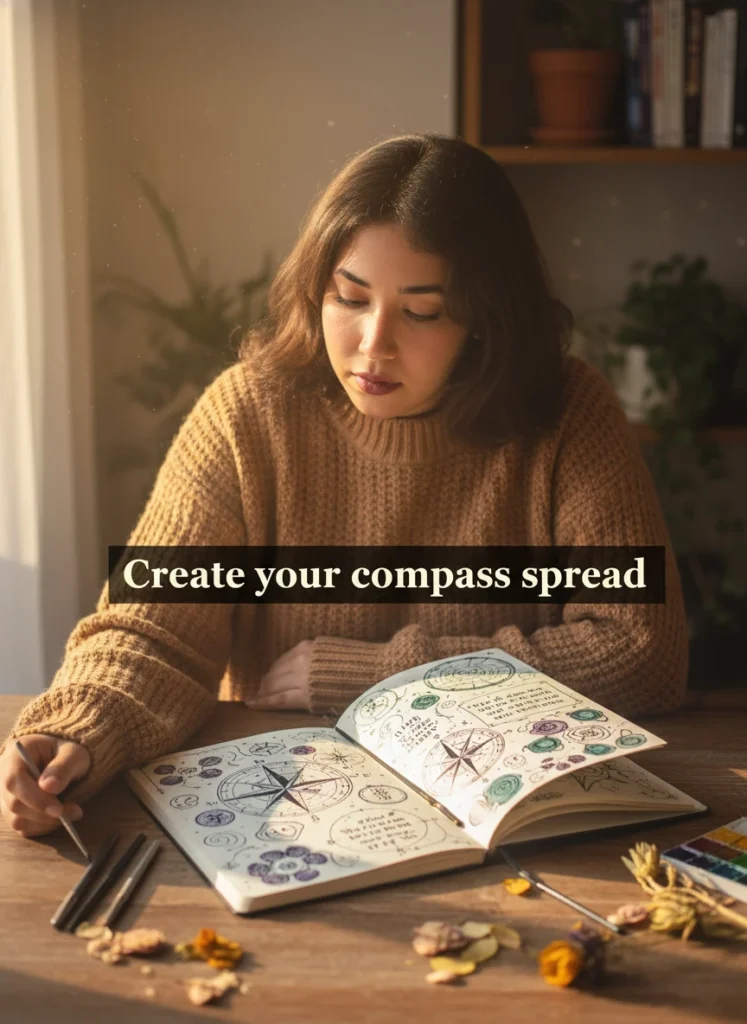
To do this, I want you to create a specific layout in your notebook called the “Compass Spread.” This visual tool will act as your daily anchor to the lessons of the open road.
Here is exactly how to design it:
- The True North: Draw a compass at the top of a blank, two-page spread. Write your ultimate core value (e.g., Freedom, Peace, Connection) at the North point.
- The Four Quadrants: Divide the rest of the pages into four equal squares.
- Quadrant 1 (The Chaos): Title this “Where am I hesitating?” Use this space to brain-dump the messy tasks you are avoiding.
- Quadrant 2 (The Backpack): Title this “What can I drop?” List the mental baggage you need to shed today.
- Quadrant 3 (The Slow Drip): Title this “Where will I pause?” Schedule a 10-minute block of absolute stillness.
- Quadrant 4 (The Bia Hoi): Title this “Who will I connect with?” Write down the name of one person you will reach out to with pure, unpretentious intention.
By filling this out daily or weekly, you constantly recreate the neurological benefits of a massive life shift.
The Tools & Setup For Your Journey
You cannot execute this inner work if your environment is chaotic and your tools are cheap.
Preparing for a mental journey requires just as much care as packing a physical suitcase. First, you need a journal that feels substantial in your hands, something with thick, textured paper that invites deep reflection.
Do not use a cheap, spiral-bound notebook from the grocery store. Invest in a tool that signals to your brain that this practice is sacred.
Next, curate your writing environment to trigger focus and calm.
Dim the overhead lights, light a candle with a grounding scent like sandalwood or cedar, and play ambient, wordless music. You are creating a physical boundary between the chaos of the world and the sanctuary of your mind.
Finally, grab a pen that writes with a smooth, dark, heavy flow. The physical sensation of the ink gliding across the page will act as a micro-meditation, grounding you in the present moment.
Remember, this environment is your boarding gate. Treat it with respect, and it will safely launch you into your inner transformative travel experience.
Closing Thoughts on Your Next Adventure
Vietnam broke me down, stripped away my ego, and rebuilt me into someone I am finally proud to be.
But the greatest lesson I learned is that the magic wasn’t actually in the geographic location. The magic was in my willingness to surrender, to be uncomfortable, and to fiercely examine my own mind.
You hold that exact same power right now, wherever you are sitting.
You don’t need to quit your job or buy a plane ticket to completely change the trajectory of your life. You just need to look inward, pick up your pen, and courageously step into the chaotic traffic of your own soul.
If you are ready to take that first brave step, I highly recommend you start your journaling habit today.
The open road is waiting for you. Grab your backpack, clear your mind, and let the journey begin.
Leave a Reply