
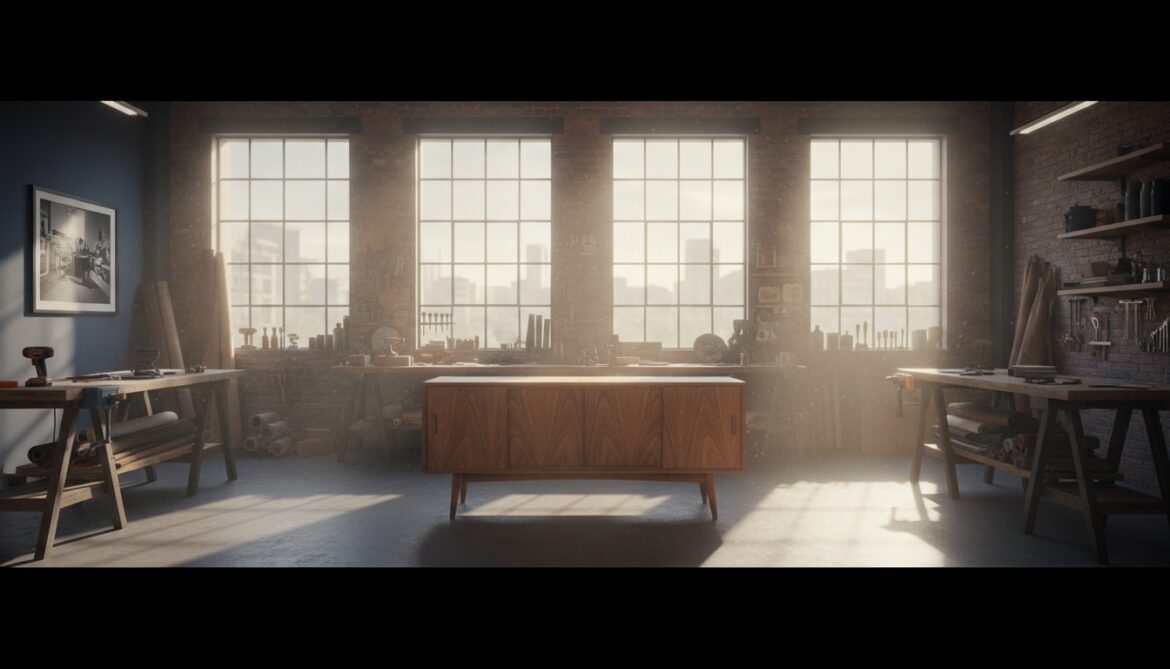
I used to be a snob about “new.”
There was a specific time, about fifteen years ago, when I thought dragging a dusty, cobweb-covered dresser into my trunk was beneath me. I wanted the flat-pack box. I wanted the smell of factory glue. I wanted the instruction manual with the little cartoon man.
I was an idiot.
Somewhere along the line, after my third “affordable” bookshelf bowed under the weight of actual books, I snapped. I realized I was paying a premium for painted sawdust. The turning point was a curb-side find: a mid-century lane cedar chest that weighed more than my Honda Civic. After a quick sanding, it glowed. It had ghosts. It had character. And it didn’t wobble when I sneezed.
If you are tired of furniture that feels like it’s made of graham crackers, you need to stop shopping at big-box stores and start haunting the thrift aisles. But you have to know what you’re looking at.
The Ghost in the Grain
Why do we care about wood?
It’s not just about durability, though that is obviously huge. It is about visual weight and emotional grounding. We talk a lot about biophilic design and bringing the outdoors in. Usually, people think that means buying a fiddle leaf fig and praying it doesn’t die.
It doesn’t.
Real wood triggers the same psychological response. It connects us to nature. In a room dominated by screens, plastic routers, and synthetic rugs, a solid oak desk acts as an anchor. It breaks up the monotony.
Think about the texture in a monochromatic room. If you are doing a cream-on-cream look, or that moody dark-on-dark vibe, you need variation. If everything is smooth, painted drywall or laminate, the room feels like a hospital waiting area. Wood grain introduces chaotic, organic lines that your brain craves.

Plus, there is the sustainability angle. I am always talking about sustainable furniture brands, but the most eco-friendly desk is the one that was built in 1970 and is currently sitting in a Salvation Army gathering dust. It has already off-gassed. It has survived five moves. It deserves a sixth.
The Field Guide to Spotting Treasure
Okay, you are in the store. It smells like mothballs and other people’s laundry detergent. You see a sea of brown furniture. How do you know what is trash and what is a diamond?
You have to get physical.
1. The Lift Test (Gravity Doesn’t Lie)
Walk up to the piece and try to lift one corner.
If you almost throw your back out, that is a good sign. Real wood is dense. Particleboard is heavy too, but it feels… dead. Dead weight versus dense weight. Solid wood feels sturdy. If the piece flies up with zero effort, it is likely hollow-core or cheap pine laminate.
We want heavy. We want a console table that feels like it could survive a nuclear winter. This is especially important if you are planning a high-low living room. Your sofa might be a budget buy, but if your coffee table is a solid slab of walnut, the whole room feels expensive.
2. Inspect the Joinery (The Drawer Test)
Pull a drawer out. All the way out.
Look at where the drawer front meets the side. Do you see staples? Plastic corner brackets? Glue oozing out?
Put it back.
You are looking for dovetail joints. These look like interlocking puzzle pieces or trapezoids holding the wood together. This is a hallmark of craftsmanship. Even if the piece is beat up, dovetails tell you that a human being cared about how this thing was put together.
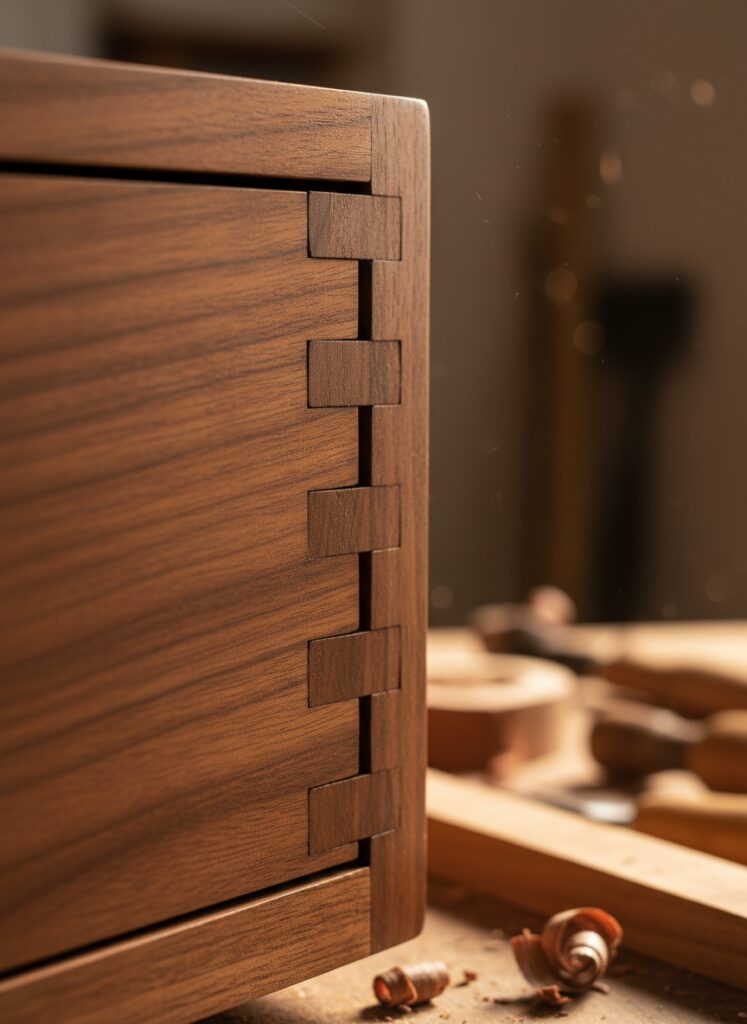
Also, look at the bottom of the drawer. Is it a thin sheet of cardboard that’s sagging? Or is it plywood? Or even better, solid wood? If you plan on using this for a human-centric home office, you are going to be opening these drawers ten times a day. You don’t want the bottom falling out.
3. The Fingernail & Grain Test
This is where people get tricked. “Veneer” is not a dirty word. High-end mid-century modern pieces are often veneer over solid wood or high-quality plywood. That is fine.
What we want to avoid is laminate (plastic printed to look like wood) or paper veneer over particle board.
Look at the grain. Follow a line of grain from the top of the table over the edge. Does the line “fall off” the edge and continue down the side? That’s real wood. Does the pattern abruptly stop and change? That’s likely a laminate sheet glued on.
Find an inconspicuous spot and press your fingernail into it.
- Plastic/Laminate: It will feel hard, slippery, and impenetrable. No mark.
- Real Wood/Veneer: You will feel a tiny bit of give. It feels organic.
If you spot a scratch, look at the color inside the scratch. If it’s white or grey, it’s particle board underneath. If it’s dark or looks like raw wood, you’re in business.
4. Visualize the “After”
Most people leave great furniture behind because they hate the orange-y 90s varnish.
You have to look past the finish. Can you sand it?
If you are into the Japandi design evolution, you are probably looking for light, raw oaks or bleached woods. You can achieve that by stripping a dark, heavy 1980s piece. It takes work, but the result is a custom piece that fits that moody minimalist vibe perfectly.
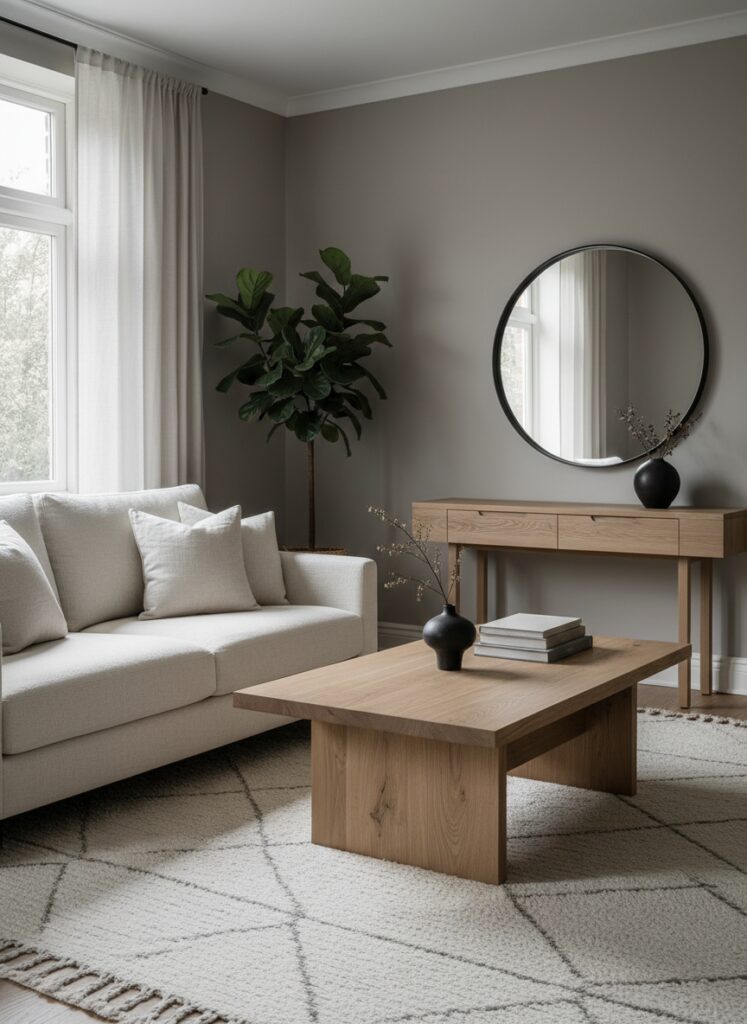
Or maybe you are obsessed with terracotta and sage green trends. A warm, honey-toned wood glows against sage green walls. It’s a color theory match made in heaven. Even if the piece looks drab now, imagine it with a coat of matte poly.
Don’t ignore the hardware, but don’t let it stop you. Changing knobs is the easiest hack in the book. If you find a dresser with amazing bones but hideous brass eagles for handles, buy it.
For more about this topic, read: How to Make IKEA Furniture Look Custom
5. The “Tech-Hiding” Potential
I look at old furniture differently now that our homes are overrun with wires.
Vintage cabinets are the secret weapon for hiding smart speakers and routers. Old speaker cloth or cane webbing on cabinet doors allows sound and signals to pass through while hiding the ugly black plastic boxes.
Look for enclosed credenzas. These are perfect for sitting under a projector screen instead of a TV. You can drill a hole in the back (since it’s real wood, it won’t crumble) for your cable management, and suddenly you have a clean, high-tech setup disguised as a vintage library.
The “Walk Away” Flags (Where People Mess Up)
I have made mistakes. I have bought things that ended up in the dumpster a week later. Here is how to avoid my failures.
The Smell That Never Dies
Open the drawers and take a big whiff.
Does it smell like old cigarettes, intense mildew, or cat pee? Close it. Walk away.
There are tutorials online that claim you can remove these odors with vinegar, charcoal, sunshine, and prayer. They are mostly lying. That smell is soaked into the fibers of the wood. If you bring it home, your entire apartment will smell like a damp basement. It is not worth the risk, especially if you are sensitive to air quality or trying to create a wellness-focused environment.
The Scale Trap
Furniture looks smaller in a warehouse with 20-foot ceilings than it will in your living room.
I once bought a “charming” armoire that literally did not fit through my front door. It lived in the garage until I sold it at a loss.
You need to know your numbers. If you are living in a studio apartment and trying to do micro-zoning, a massive, heavy Victorian sideboard is going to eat your entire floor plan. You want pieces with “legs.” Furniture that is lifted off the ground makes a small room look bigger—similar to how mirrors work to expand space.
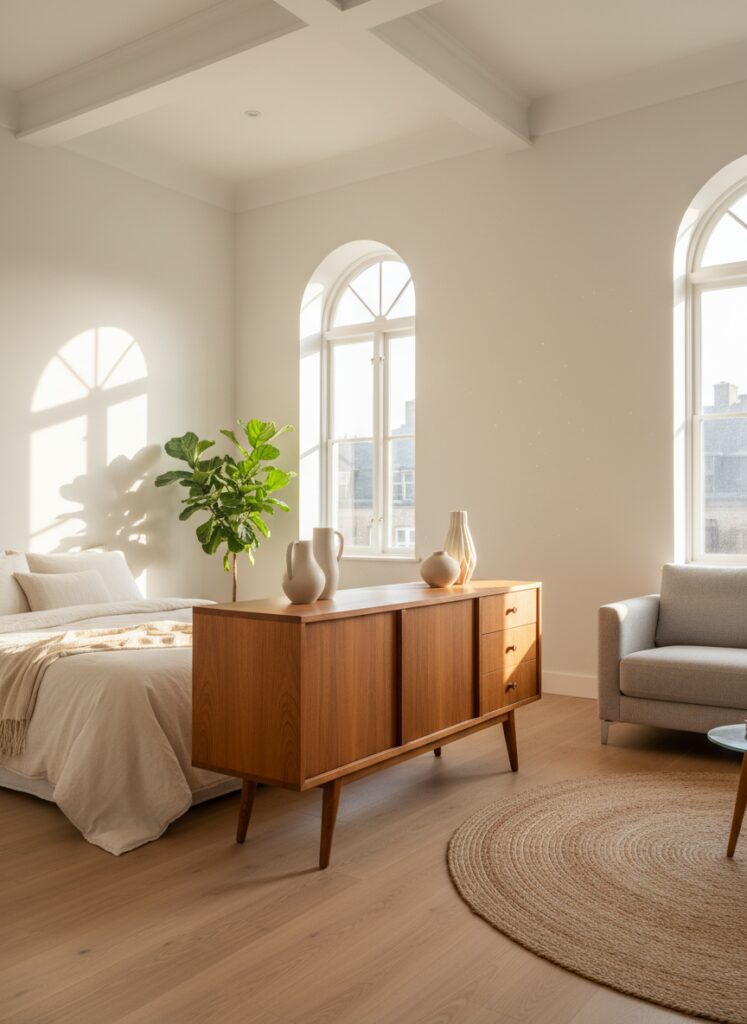
If you have a broken-plan living room, look for pieces that are finished on the back so they can float in the middle of the room. Most cheap dressers have a cardboard back. You can’t float those.
The “I Can Fix It” Delusion
Be honest with yourself.
Are you actually going to reupholster that chair? Do you own a staple gun? have you ever used a sewing machine?
If a piece of wood furniture has structural damage—wobbly legs, a cracked frame, deep rot—leave it for the pros. Sanding and staining are one thing. Rebuilding a chair leg requires clamps, wood glue, and patience that you probably don’t have on a Tuesday night.
Don’t fill your garage with projects. Fill your home with furniture.
There is a fine line between a “diamond in the rough” and “garbage.”
Designing With Your Finds
Once you get the piece home, the fun starts.
If you found a weirdly shaped, tall narrow table, you just solved your lack of a foyer. Use it to create a fake entryway behind your sofa.
If you found a dark, heavy bookcase, balance it out. If your walls are dark—maybe you jumped on the dark ceiling paint trend—make sure you use warm white lightbulbs. The warmth of the light will pull the red and orange tones out of the wood, making it look cozy rather than spooky.
If you are renting and can’t paint, wood is your best friend. It adds color without losing your security deposit. Pair a thrifted wood dining table with some renter-friendly lighting hacks, like a plug-in pendant, and you look like you hired a designer.
It is about balance. The 60-30-10 rule applies to wood tones too. Let the wood be your 30% secondary color. It warms up the greys and whites.
Thrifting is a hunt. It’s frustrating. You will go five times and find nothing but broken humidifiers and Twilight DVDs. But then, on the sixth time, you’ll spot a solid oak card catalog file or a Danish teak side table for twenty bucks.
And that feeling? That beats opening a flat-pack box any day.