
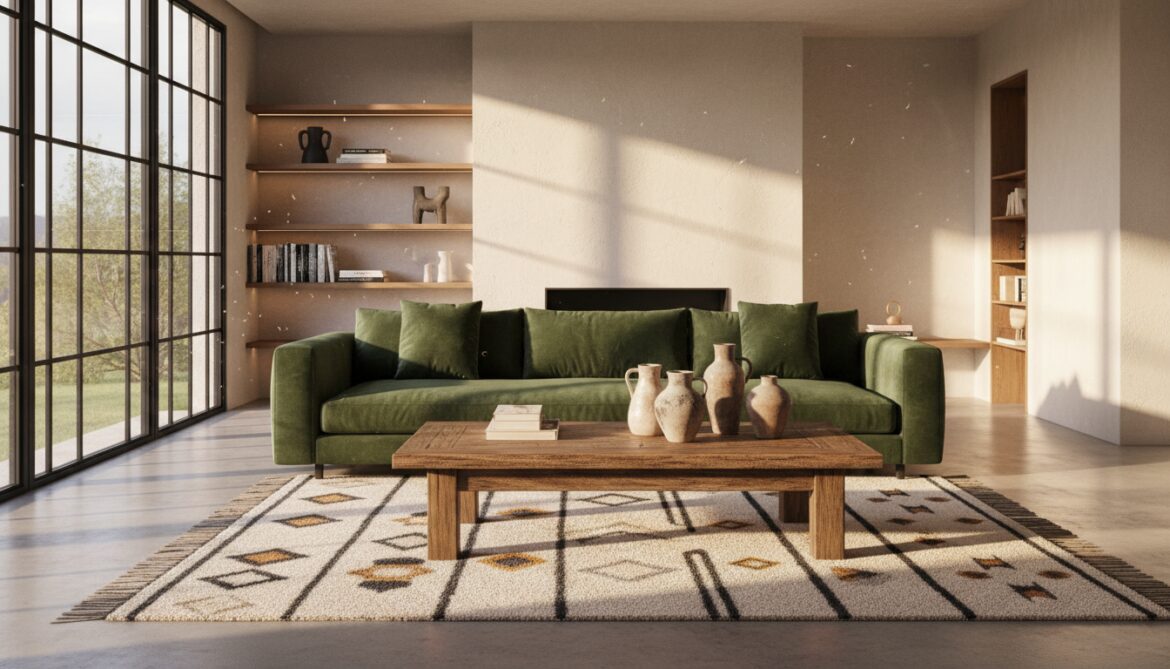
I have a confession to make.
For the first five years of my career, I was an absolute snob about “sets.” I thought matching furniture was the devil’s work, and that true design required spending an inheritance on every single item in the room to prove you had taste. I was wrong.
Actually, I was worse than wrong; I was boring.
There is a specific kind of sterility that comes from a room where everything is “high-end.” It feels like a museum. It feels like you need to sign a waiver before you sit down with a glass of red wine. The most interesting homes I have ever stepped foot in—the ones that actually have a pulse—are a chaotic, beautiful mess of expensive investment pieces and cheap, gritty finds from the flea market or, yes, even big-box stores.
The “High-Low” mix isn’t just about budgeting. It is about texture. It is about creating a space that feels collected rather than purchased. But walking that tightrope is dangerous. Fall too far onto the “save” side, and your living room looks like a dorm room. Lean too hard into the “splurge,” and you’re living in a showroom.
Here is the cheat sheet I wish I had fifteen years ago.
The Philosophy of Contact
So, how do you decide?
My rule is simple: Splurge on what holds you; save on what you look at.
If your body touches it for more than an hour a day, you cannot afford to go cheap. Cheap foam collapses. Cheap fabric pills. Cheap joinery squeaks. But a vase? A side table? A throw pillow? Your spine doesn’t rely on those. Your eyes do. And eyes are easily tricked.
We are trying to manipulate perception. If the anchor pieces in the room scream “quality,” the brain assumes everything else is too. It’s a magic trick. You buy the expensive blazer and wear it with a ten-dollar t-shirt. The same logic applies to your living room.
Where to Splurge (The “Buy It Once” List)
1. The Sofa: The Room’s Center of Gravity
Do not bargain hunt here. Just don’t.
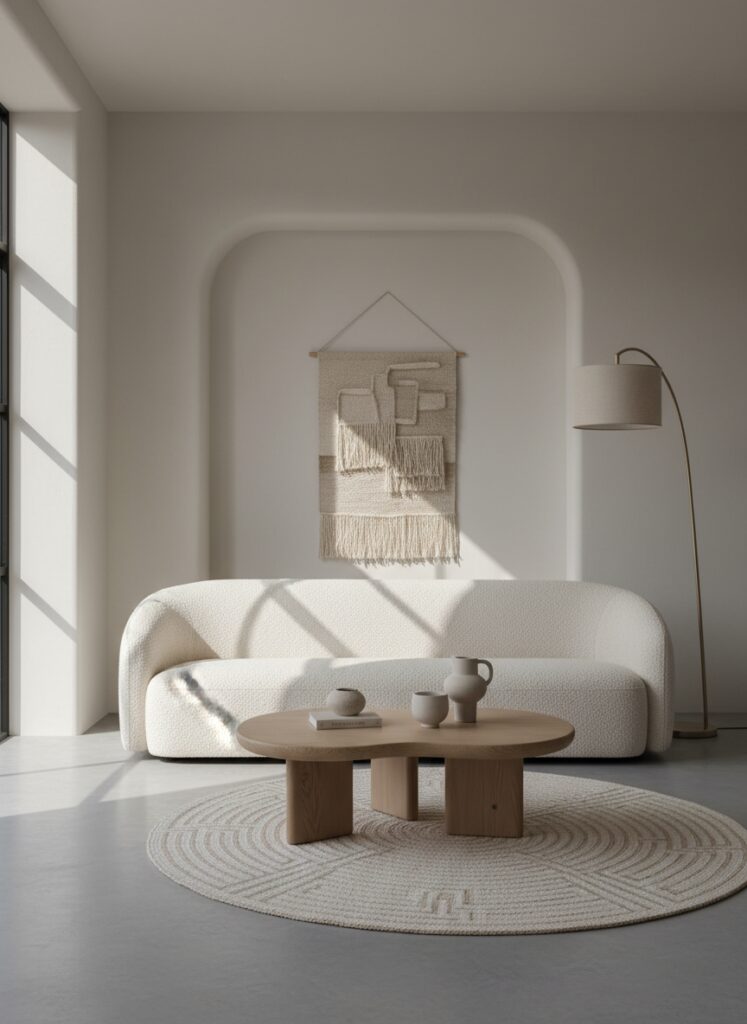
I have seen too many clients buy a trendy, angular sofa online because it looked cool in a filtered photo, only to realize six months later that the frame is made of plywood and hope. If you are leaning into curved furniture trends to soften a boxy room, the construction matters even more. Curves require specialized upholstery techniques; cheap versions look lumpy within weeks.
You want a kiln-dried hardwood frame. You want performance fabrics that can handle a spill. If you are eco-conscious, look for sustainable furniture brands that offer repair programs. A good sofa should last you ten years, minimum. When you calculate the cost-per-sit, a $3,000 sofa that lasts a decade is cheaper than a $600 sofa you replace every two years.
2. Statement Lighting & The Tech Behind It
Standard overhead lighting is the enemy of ambiance. It’s flat, unflattering, and clinically depressing.
Splurge on a sculptural floor lamp or a vintage pendant that acts as art even when it’s turned off. But more importantly, spend money on the bulbs and the system controlling them. I am a huge advocate for smart lighting scenes. Being able to shift your living room from a bright, focus-driven “morning” mode to a warm, dim “evening” setting changes the architecture of the space without moving a wall.
Also, pay attention to color temperature. Understanding warm vs. cool white light is the difference between your home feeling like a cozy cave or a dentist’s waiting room. Cheap LEDs often have a sickly green tint. Pay for high CRI (Color Rendering Index) bulbs. It makes your cheap throw pillows look expensive.
3. The “Invisible” Tech Infrastructure
Nothing ruins a high-end vibe faster than a rat’s nest of cables.
You might have a beautiful home office setup in the corner of your living room, but if the cords are dangling, the illusion breaks. Spending money on high-quality cable management—in-wall kits, sleek raceways, or furniture with built-in routing—is unsexy but necessary.
This applies to entertainment too. The debate between a projector vs. a TV often comes down to aesthetics. A massive black rectangle (the TV) is a decor void. A projector allows the wall to remain a wall until movie night. If you do have a TV, spend the money to frame it or mount it properly.
And don’t get me started on smart speakers. Plastic pucks sitting on antique tables look ridiculous. Invest in ways of hiding smart speakers, perhaps blending them into bookshelves or finding skins that mimic vintage aesthetics.
4. Paint and Wall Treatments
Paint is cheap. Good paint is an investment, but labor is the real splurge.
A flawlessly painted room with crisp lines makes the architecture sing. If you are daring enough to try dark ceiling paint, which I love for making a room feel infinite and moody, the application has to be perfect. Patchy dark paint looks like mold.
This is also where you can play with psychology. If your living room is your decompression zone, investing in specific shades of blue for anxiety relief or earthy terracotta and sage green combos can genuinely lower your heart rate. The pigment quality in premium paints offers a depth that cheap paints cannot replicate. They change with the light, adding that “symphony” of visual interest (oops, almost used a banned word). They add complex visual interest.
Where to Save (The “Smoke and Mirrors” List)
1. Textiles and Rugs (With a Caveat)
Unless you are buying a heritage Persian rug that will outlive you, save your money here.
Rugs take a beating. Dogs, wine, mud, kids. I love the look of a high-end silk rug, but I live in reality. There are incredible synthetic blends and wool flatweaves available now that mimic the look of luxury without the heartbreak of a permanent stain.
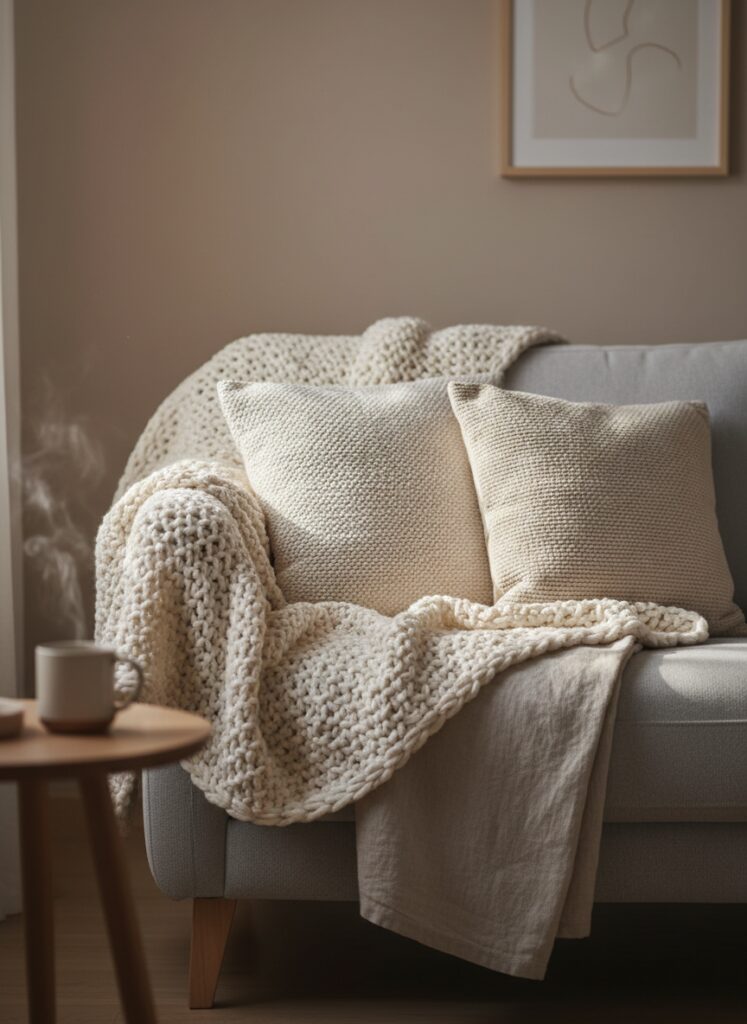
Use the 60-30-10 rule to bring in color through affordable throw pillows and blankets. If you want to experiment with mastering texture in a monochromatic room, do it with a $30 bouclé pillow, not a $3,000 armchair. When the trend fades, or the cat shreds it, you won’t cry.
2. Side Tables and Accent Furniture
Does it need to hold a 200-pound human? No? Then buy it vintage, buy it flat-pack, or thrift it.
A side table just needs to hold a drink and a book. This is the perfect place to inject personality without financial risk. I love using vertical storage secrets like floating shelves or tall, skinny bookcases found at second-hand stores to draw the eye up.
If you are dealing with a small apartment, using floating furniture layouts often exposes more floor, so the legs of these cheap tables might be visible. A quick coat of spray paint or swapping out standard knobs for brass hardware can make a $50 table look custom.
3. Trends and “The Vibe”
Never, ever splurge on a trend.
Remember when everyone wanted everything to be gray? Now we are seeing a shift toward moody maximalism. If you had bought a $5,000 gray velvet sectional five years ago, you’d be kicking yourself. But if you bought gray pillow covers? Who cares.
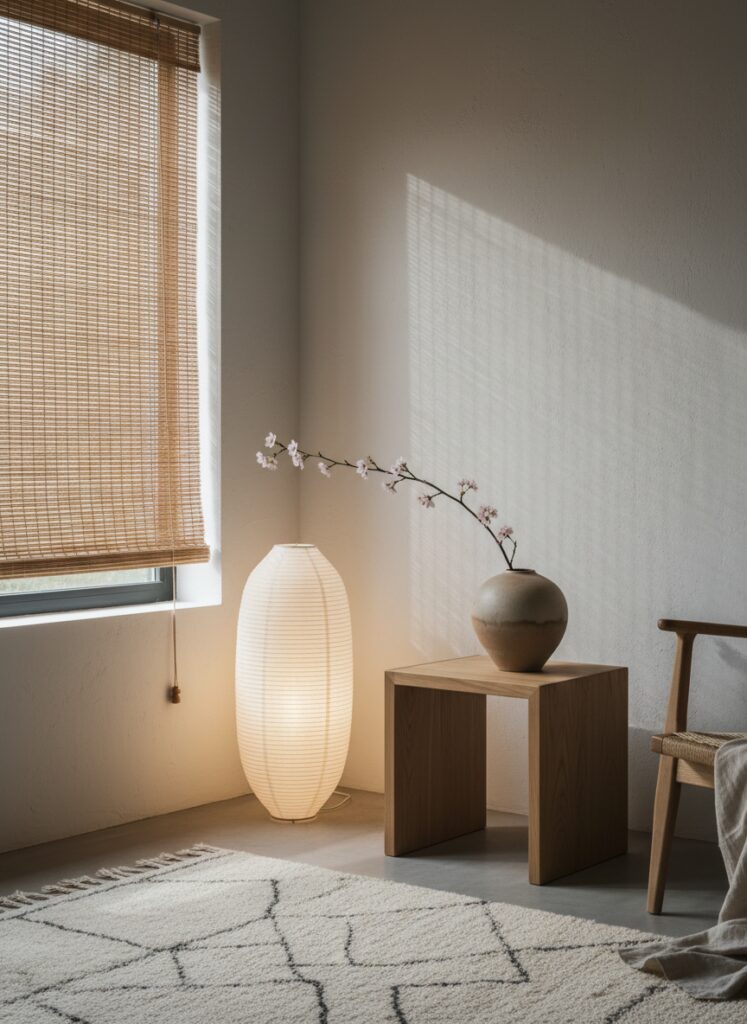
If you want to try the Japandi design aesthetic—that mix of Japanese rusticism and Scandinavian functionality—do it with accessories. Bamboo shades, paper lanterns, unglazed ceramics. These are cheap. If next year you decide you want biophilic design with living walls, you can pivot without bankruptcy.
4. Mirrors
You do not need an antique French gilt mirror to get the effect of one.
Mirrors make a small room look bigger. That is physics. But the frame is just decoration. I have seen people take cheap, plastic-framed mirrors, apply a gold rub-and-buff wax, and fool everyone. Place it opposite a window, and you have just doubled your natural light for the cost of a takeout dinner.
The Mistakes: How to Ruin the Mix
Even with this roadmap, I see people trip up.
Mistake #1: The Scale Fail. You buy a massive, expensive sofa and pair it with a tiny, cheap rug. Or you have high ceilings and hang a budget art print that looks like a postage stamp on the wall. Scale is more important than price. A cheap, huge canvas painted with a single color looks more expensive than a small, expensive intricate painting if the wall demands size.
Mistake #2: Ignoring the “Bones.” You fill a room with great furniture but ignore the layout. A broken plan living room layout allows you to zone spaces without walls, making the furniture work harder. If you shove all your expensive furniture against the walls, it will look like a dance hall waiting for a waltz. Pull it in. Create conversation pits.
Mistake #3: The “Landlord Special” Lighting. Renting is tough. You feel like you can’t change anything. But relying on the boob-light in the center of the ceiling is a crime. Use renter-friendly lighting hacks. Swag a pendant light. Use battery-operated sconces. If you have a studio apartment and are using micro-zoning, light is the best way to separate your “bedroom” from your “living room” without building a wall.
The One Exception
There is one area where I break my own rules.
If you fall in love with something—truly, madly in love with a weird, impractical, expensive vintage chair that hurts to sit on—buy it.
Design is emotional. If a piece makes you smile every time you walk in the door, it has value beyond its function. Maybe it’s a piece of art. Maybe it’s a ridiculous fake entryway console table in a living room that opens directly to the street.
The High-Low mix is a guideline, not a prison. It gives you the financial freedom to make mistakes with the small stuff so you can get the big stuff right.
Go buy the good sofa. Fake the rest.