
I’ll be honest with you.
When the term “Japandi” first started clogging up my Pinterest feed about five years ago, I hated it. It felt like a marketing gimmick invented to sell beige sofas to people who were afraid of color. It looked sterile. It looked like a dentist’s office where you weren’t allowed to wear shoes, and frankly, I thought it was devoid of soul.
I was wrong.
Well, I wasn’t wrong about the early execution of it, which was often flat and lifeless, but I was wrong to dismiss the philosophy behind it.
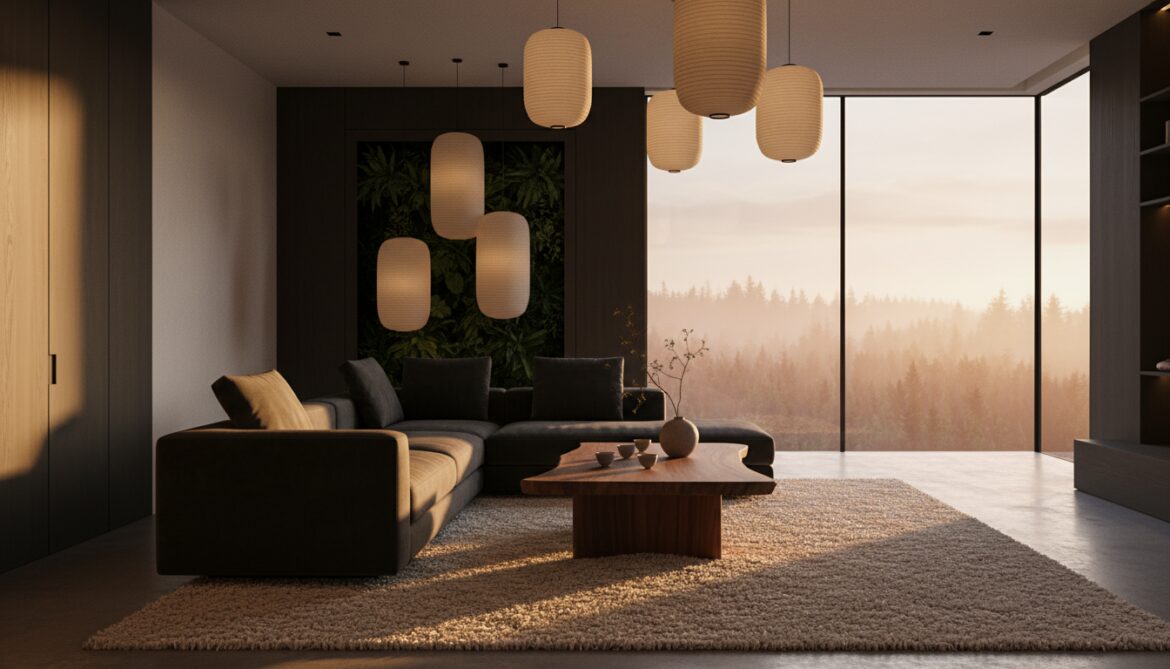
What’s happening right now is a shift. We are moving away from that flat, catalogue-perfect look into something much grittier, moodier, and infinitely more livable. The Japandi of this year isn’t about blinding white walls and pale oak anymore; it’s about high contrast, deep shadows, and materials that feel like they actually came from the earth.
It’s evolved. And if you’re a renter trying to make a boxy apartment feel like a sanctuary, or a homeowner tired of the “grey everything” era, this evolution is exactly where you need to be looking.
The Meat: Why This Marriage Actually Works
So, why are we still talking about this? Why hasn’t this trend died the same death as chevron print or mason jar lighting?
Because it solves a fundamental problem.
We all want the coziness of Scandinavian design—that “hygge” factor that makes you want to curl up with a blanket. But Scandi on its own can sometimes drift into clutter. Just piles of blankets and knick-knacks. On the flip side, we crave the intentionality of Japanese design, specifically the concept of Wabi-Sabi (finding beauty in imperfection). But pure Japanese minimalism is hard to maintain if you have kids, pets, or a hobby that involves more than one object.
Japandi is the compromise.
It is the functional middle ground. It allows for the messiness of life but asks you to frame that messiness in a way that looks like art.
The evolution we are seeing this year is a move toward “Dark Japandi” or “Organic Japandi.” It’s less about perfection and more about texture. We are seeing a rejection of fast furniture in favor of pieces that tell a story. It’s no longer just about “clean lines.” It’s about broken lines, rough edges, and the interplay of light and shadow.
Real-World Application: How to Actually Do This (Without Spending a Fortune)
Okay, let’s get into the weeds.
How do you take this high-concept philosophy and apply it to a 600-square-foot apartment or a suburban living room that currently lacks character? You have to break it down by texture, layout, and light.
1. The Furniture: Low, Natural, and Sustainable
The center of gravity in a Japanese-inspired room is low.
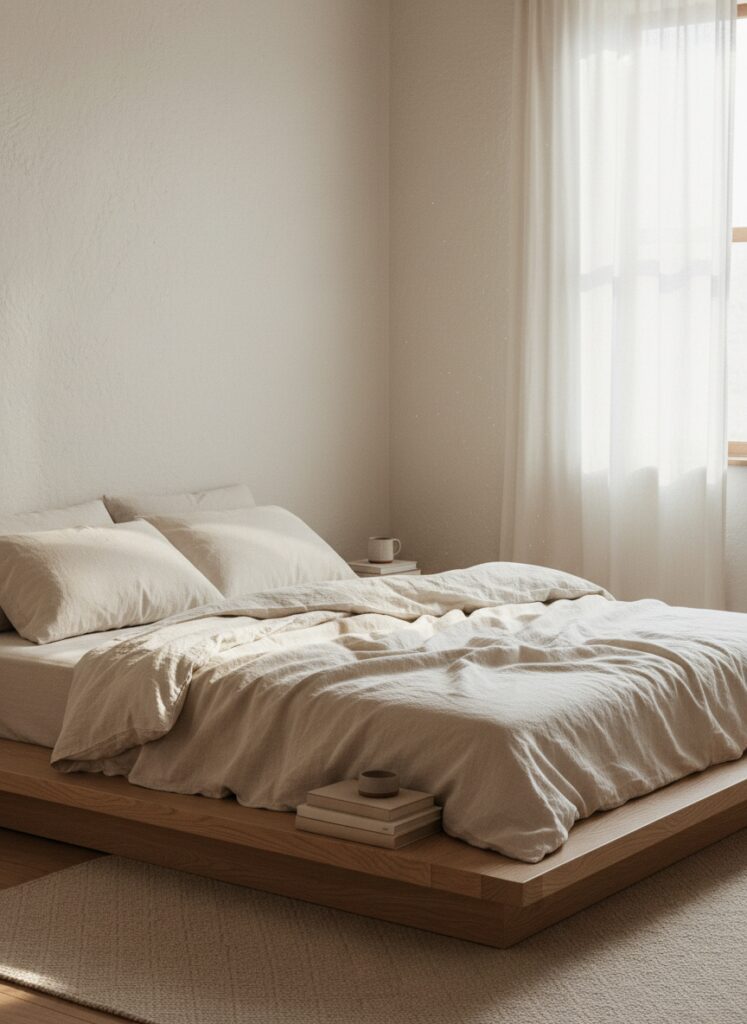
If you look at standard Western design, everything is high. High beds, high sofas, high dining tables. To get this look, you need to drop everything down a few inches. A low-profile sofa makes your ceilings look higher, which is a massive cheat code for small spaces.
But here is the kicker: the material matters more than the shape.
Stop buying particle board. I know it’s cheap, but it lacks the soul required for this aesthetic. You want to look for solid woods, bamboo, and rattan. This ties directly into the growing demand for sustainable furniture choices. If you can hunt down vintage pieces or buy from brands that use ethically sourced timber, you are winning. A single, solid wood coffee table with a raw edge does more for a room than five cheap, matching side tables ever could.
The wood tones don’t need to match perfectly. In fact, they shouldn’t.
Mix a dark walnut with a lighter ash. The friction between the wood tones creates visual interest that flat, matching sets simply cannot achieve.
2. The Layout: Breaking the Plan
If you have a large open room, or even a studio, the worst thing you can do is push all your furniture against the walls.
It’s a reflex. We think it creates more space. It doesn’t. It creates a dance floor in the middle of the room that nobody uses.
You need to embrace “floating” your furniture. Pull the sofa into the center. Use a console table behind it. This creates intimacy. In the context of the new Japandi, we are looking at “broken-plan” living. You want the airflow of an open plan but the coziness of distinct zones.
Use open shelving units as room dividers.
The light still passes through, so you aren’t closing off the room, but you are mentally signaling: “This is where we eat, and this is where we sleep.” This technique is practically mandatory for studio apartments where micro-zoning is the only way to stay sane. If you sleep where you work, you will never truly rest.
3. The “Green” Element: Living Walls and Biophilia
Plants are not accessories here. They are structural elements.
In the previous iteration of this trend, you’d see one sad little fiddle leaf fig in the corner. That’s done. We are moving toward serious biophilic design. We are talking about integrating nature so deeply that it feels like the architecture.
If you are renting, you obviously can’t build a greenhouse atrium. But you can use vertical space.
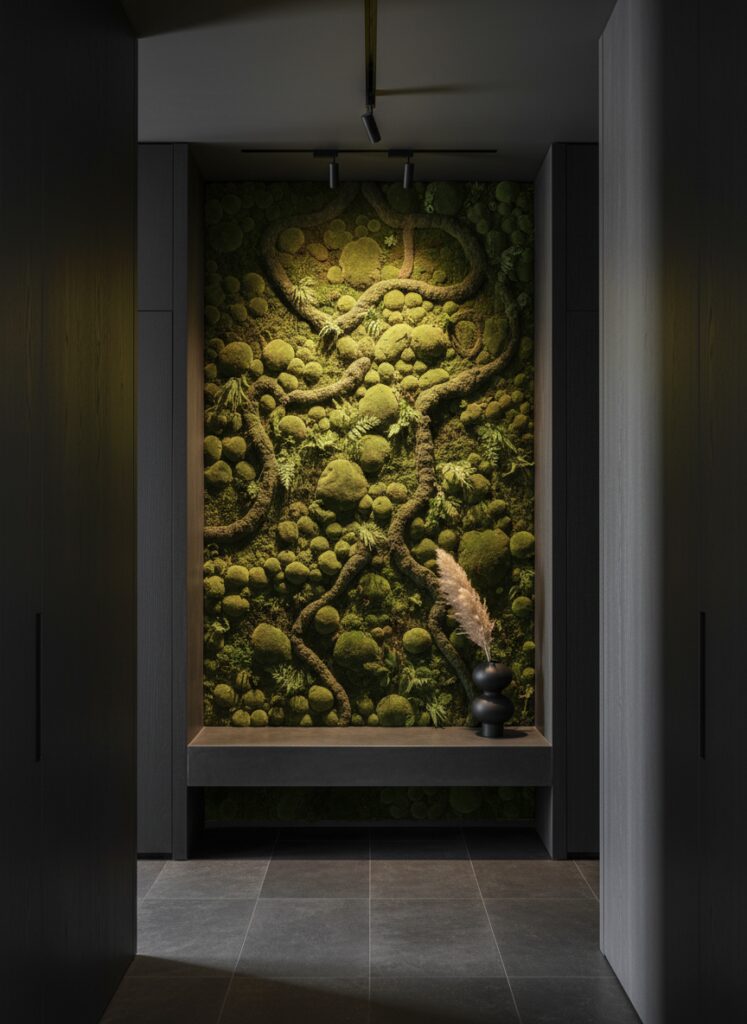
Consider a living wall or a moss wall art piece. It adds sound absorption (which makes the room feel quieter and more “zen”) and introduces a chaotic, organic texture that breaks up the clean lines of the furniture. If a full living wall is too much maintenance, group your plants. Three large plants clustered together create a “canopy” effect that feels intentional, whereas one plant just looks like decoration.
4. Lighting: The War on The “Big Light”
Turn off your overhead lights.
Seriously, never turn them on again. The overhead light is the killer of vibe. It flattens everything.
Japanese interiors often rely on floor-level lighting and paper lanterns (Akari style) that diffuse light softly. Scandinavian interiors rely on candlelight and warm pools of lamp light. Combine them.
You want pockets of illumination. A reading lamp over the armchair. A strip of warm LED behind a mirror. Speaking of which, using mirrors strategically is not just about checking your hair. It’s about bouncing that soft, diffused light into dark corners to make the room breathe.
For renters, this is the easiest hack. You can’t rewire the ceiling, but you can buy three really good floor lamps and change the entire architecture of the room with shadows.
5. Storage: The Art of Hiding
Japandi dies the moment you see a pile of mail or a tangle of charging cables.
Visual silence is the goal.
This means you need aggressive storage solutions. But unlike the Maximalist trend where clutter is celebrated, here we need to hide it. Use vertical storage secrets to get things off the floor. Tall cabinets with solid doors (or rattan fronts to let air in but hide the mess) are better than open shelving.
If you have open shelving, you need baskets. Uniformity is key here.
And don’t forget the entryway. Even if your front door opens directly into your living room, you need to fake an entryway. A small bench, a row of hooks, and a slat-wall divider can mentally separate “outside” from “inside.” This transition is a massive part of Japanese home culture (the Genkan), and adopting it keeps the street grit out of your sanctuary.
6. The Contrast: Moody Maximalist Accents
Here is where the evolution is most obvious.
Old Japandi was terrified of black. New Japandi loves it.
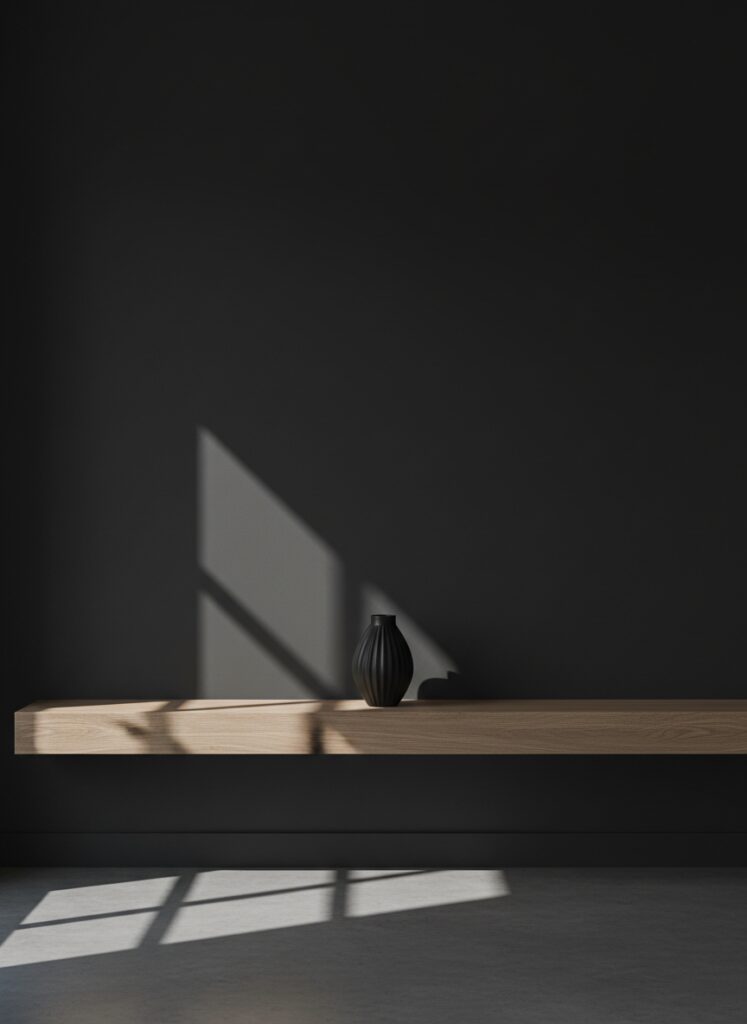
Don’t be afraid to paint a wall charcoal or deep forest green. This leans into the “Moody Maximalism” vibe but restrains it with Scandi furniture. A dark wall makes light wood pop. It creates a cocoon. If you have a small apartment, a dark wall blurs the corners and can actually make the space feel infinite rather than cramped.
The “Mistake” Section: Where You Will Mess Up
I see people try this style and fail because they overthink the “minimalism” part.
Mistake #1: The Showroom Syndrome You buy everything from one store, from the same collection. Your home looks like a catalogue page. It has no history. It feels cold. You need to mix the old with the new. A scuffed vintage stool next to a sleek modern sofa is what gives the room a heartbeat.
Mistake #2: Ignoring Texture for Color People obsess over finding the perfect shade of “greige” paint but forget about the textiles. If your walls are smooth, your floor is smooth, and your sofa is smooth, you live in a box. You need bouclé, linen, raw wood, wool, and stone. If I close my eyes and touch your room, it should feel interesting.
Mistake #3: Forgetting the Acoustics Minimalism sounds echoey. If you take out all the clutter, sound bounces. You need heavy rugs. You need curtains that puddle on the floor. Soften the room, or it will feel like an empty art gallery, not a home.
The Sign-off
Japandi isn’t about following a rulebook anymore; it’s about creating a space that lowers your blood pressure the second you walk through the door.
So, go paint a wall black, buy a weird vintage chair, and for the love of design, turn off the big light.