
The “Green” Price Tag Lie
I threw a catalogue in the recycling bin yesterday. It featured a “sustainable” accent chair made from ethically sourced teak and recycled ocean plastic. It was gorgeous. It also cost $4,200.
For fifteen years, I have watched the interior design industry pull this exact bait-and-switch. They tell you that saving the planet is a luxury reserved for people with trust funds, while the rest of us are morally obligated to feel guilty about buying flat-pack laminate that dissolves the moment a water ring touches it. It makes me furious.
Sustainability shouldn’t be a tax on your conscience. It should just be the standard.
But here is the hard truth about 2025: finding furniture that doesn’t kill the planet and doesn’t bankrupt you is an investigation, not a shopping trip. You have to dig. You have to read the boring spec sheets about FSC certifications and VOC emissions while ignoring the glossy marketing photos.
I have done the digging for you. I’m tired of the gatekeeping. Let’s talk about the brands that are actually trying to bridge the gap between “cheap trash” and “museum piece.”
What Does “Affordable Sustainability” Actually Mean?
It’s a sliding scale. If you are expecting a solid walnut dining table for fifty bucks, you are looking for a miracle, not a retailer.
True affordability in the sustainable sector means paying a slightly higher upfront cost for a piece that won’t end up in a landfill in eighteen months. It is the cost-per-use equation. A $300 sofa that breaks in a year costs you $300 a year. A $1,200 sofa that lasts ten years costs you $120 a year.
That is the math we are doing today.
We are looking for modularity. We are looking for clean chemical profiles. We are looking for businesses that take their stuff back when you are done with it.
7 Brands That Pass the Vibe (and Wallet) Check
1. Sabai Design: The Renter’s Holy Grail
If you have ever tried to drag a full-sized sofa up a fourth-floor walk-up, you know the specific kind of sweat-drenched rage I’m talking about. Sabai fixes this without resorting to flimsy cam-locks.
They are entirely closed-loop. This means if you buy a velvet loveseat from them and your cat shreds the armrest, you don’t throw the couch away; you just buy a new armrest or slipcover. Their “Revive” program is where the real deals are, selling second-hand pieces at a steep discount.
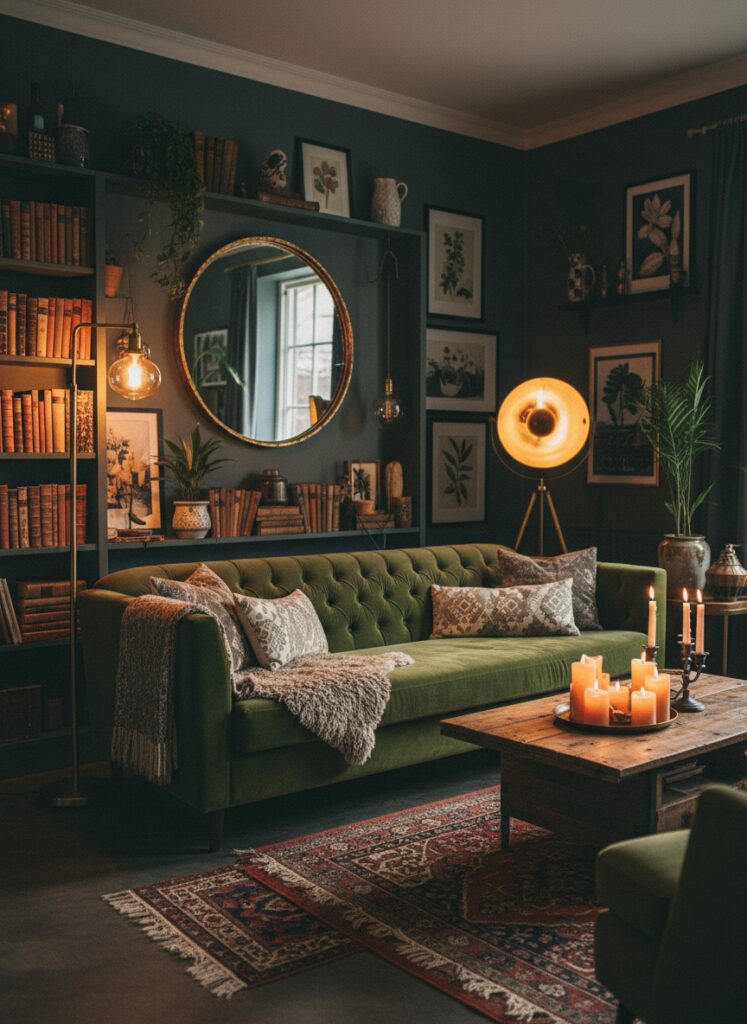
The Design Fit: Their velvet options are fantastic for those of you leaning into moody maximalism. In a small apartment where you are trying to make a big impact without painting the walls, a deep moss green or crushed berry sofa anchors the room. It absorbs light rather than reflecting it, creating that cozy, den-like atmosphere that is so hard to fake with cheap polyester.
2. IKEA (Yes, But You Have to Be Picky)
Stop rolling your eyes. We cannot have an honest conversation about budget furniture without the Swedes.
However, you have to shop smart. Ignore the $10 Lack tables that are essentially cardboard honeycombs filled with air. You need to look at their solid wood lines (like IVAR or HEMNES) and their bamboo collections. Bamboo is a grass, it grows back incredibly fast, and it is harder than red oak.
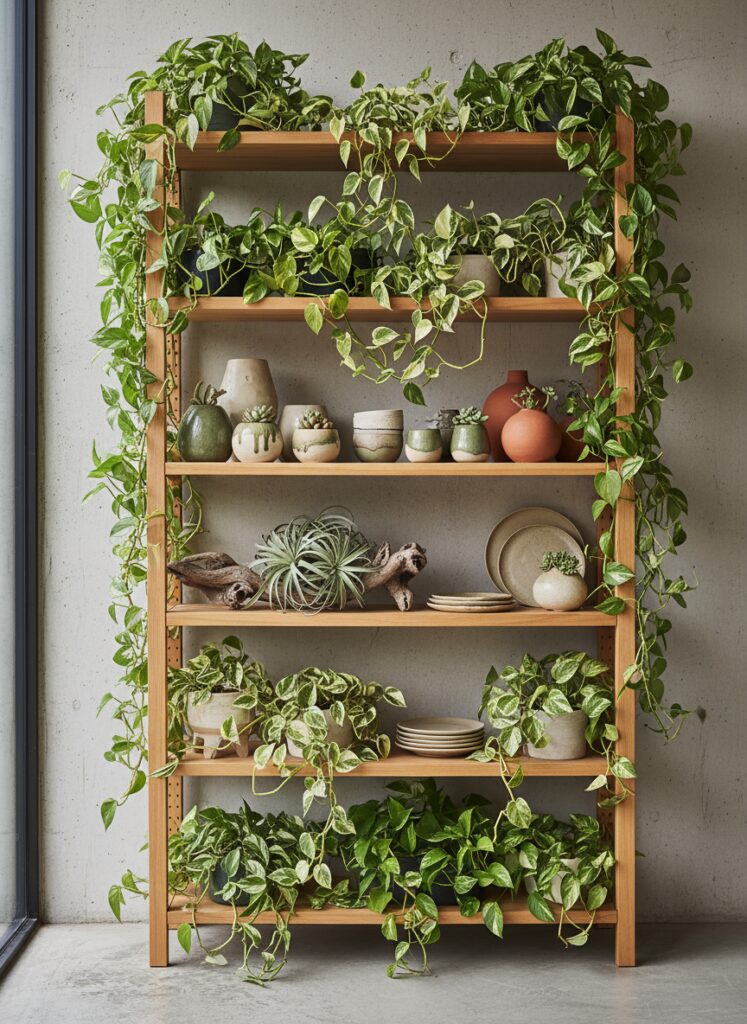
The Design Fit: IKEA is the king of verticality. If you are struggling with vertical storage in a tight footprint, their solid pine shelving units are a blank canvas. You can stain them, cut them, or bracket them to the wall. This is particularly useful if you are trying to incorporate biophilic design elements. A raw pine shelf packed with trailing pothos and ferns creates a “living wall” effect for a fraction of the cost of a custom installation.
3. Burrow: The “Floating” Champion
Burrow made their name on modularity, but their biggest asset is actually the hardware. The latches are steel, heavy, and satisfying to click together.
Why does this matter? Because cheap sofas wobble. Burrow sofas stay rigid.
The Design Fit: Because the back of a Burrow sofa is finished just as beautifully as the front, they are the ultimate tool for floating furniture layouts. If you have a small living room, pushing furniture against the wall is the default instinct, but it’s often wrong. Pulling a Burrow sofa into the center of the room creates a walkway behind it. It defines the space. If the back of your sofa looks like unfinished plywood or has a weird zipper running down the middle, you can’t float it. With these, you can.
4. Floyd: The Industrial Minimalist
Floyd started with a set of steel legs that you could clamp onto any flat surface to make a table. They have expanded, but that ethos of “take it apart and move it” remains. Their shelving systems are heavy, powder-coated steel and real birch plywood.
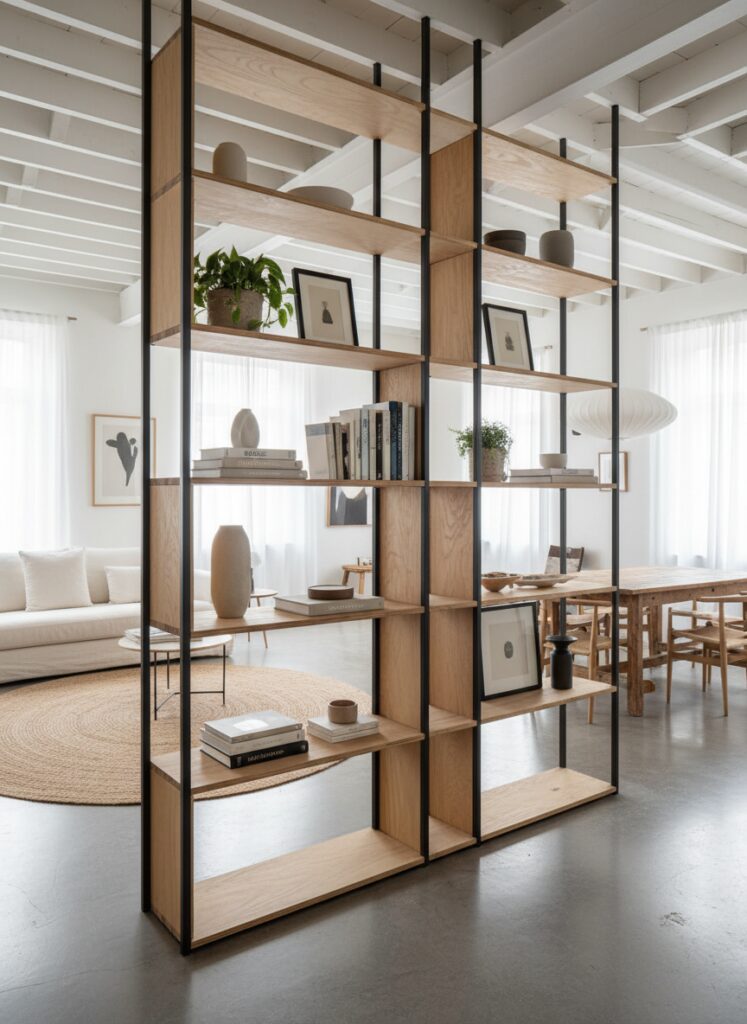
The Design Fit: This is for the people trying to figure out broken plan living. The Floyd shelving system is open-backed. If you place it perpendicular to a wall, it acts as a room divider that lets light pass through. You separate your dining area from your lounge without closing off the room. It’s a physical barrier that doesn’t feel like a barricade.
5. The Citizenry: Lighting That Isn’t Plastic
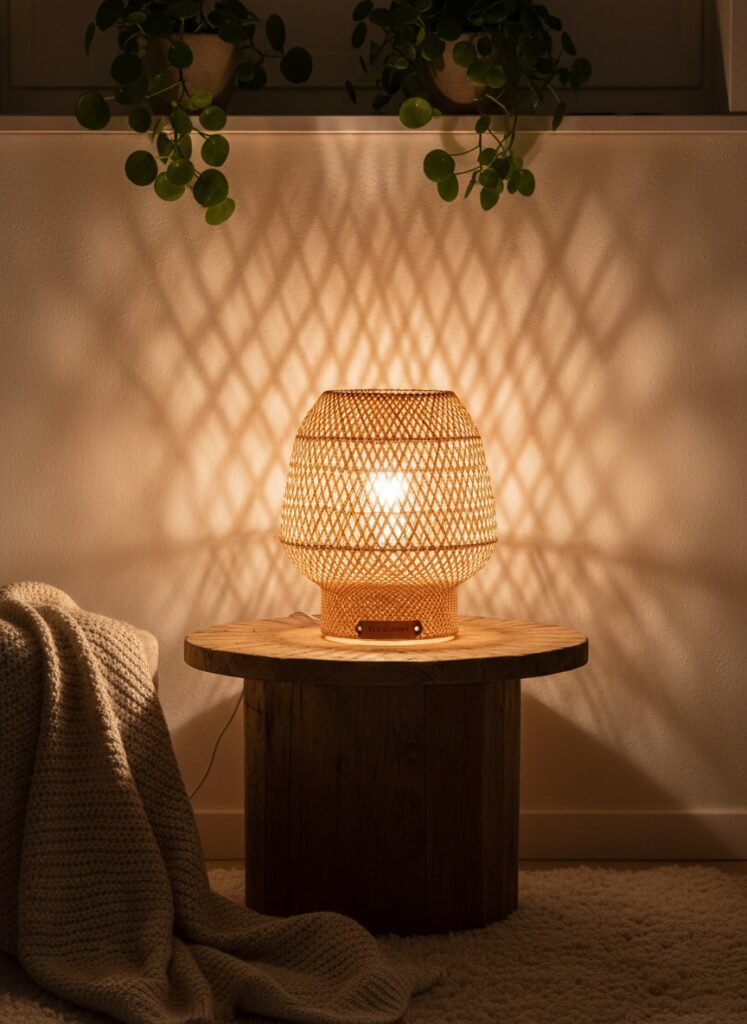
Lighting is usually the dirtiest part of the decor industry. Cheap lamps are often made of resin (plastic) and coated in paints that off-gas for months. The Citizenry works directly with artisan groups to use natural materials like wicker, clay, and Hinoki wood.
Is a $200 lamp affordable? Compared to a $40 Target lamp, no. Compared to a $900 designer lamp, yes. And the texture is incomparable.
The Design Fit: Lighting is the number one issue I see in rentals. You are stuck with the landlord’s “boob light” on the ceiling. Using natural material lamps from The Citizenry helps you execute renter-friendly lighting hacks. You need low, warm light to counteract the harsh overheads. A woven rattan table lamp casts complex shadows that add texture to a boring white box, instantly changing the vibe from “dentist waiting room” to “sanctuary.”
6. Etsy Reclaimers (The Wild West)
This isn’t a single brand, but a strategy. Search for “reclaimed wood console table” or “live edge bench” and filter by your country to save on shipping.
There are thousands of woodworkers using barn wood or fallen trees to make furniture that puts West Elm to shame. You are paying for labor and wood, not marketing overhead.
The Design Fit: This is your secret weapon for the fake entryway. Most living rooms open directly to the front door, leaving you with nowhere to put your keys. A narrow, reclaimed wood console table tucked behind the door or along a small strip of wall creates a “drop zone.” Pair it with a few hooks and you have manufactured a foyer out of thin air.
7. Article: The Mid-Century Modern Workhorse
Article cuts out the showroom, which cuts out the markup. Their timber sourcing is generally transparent, and they use a lot of rubberwood—a byproduct of the latex industry that used to be burned.
The Design Fit: They excel at sideboards and dressers. If you are in a studio, you need to master studio apartment micro-zoning. A low, long sideboard from Article can sit at the foot of your bed, creating a visual distinction between your sleeping area and your living area. It creates a “knee-wall” effect. Plus, the storage density in their dressers is high, helping you hide the clutter that makes small spaces feel smaller.
Where People Screw This Up (The Mistakes)
You have the list. You have the credit card. Now, here is how you are going to ruin it if you aren’t careful.
Mistake 1: Ignoring the “Thud” Test
When you buy affordable furniture, especially online, you look at the dimensions. You rarely look at the weight. This is a fatal error.
If a coffee table is 36 inches wide but only weighs 12 pounds, it is hollow. It is a drum. It will sound cheap when you put a cup down on it, and it will chip if you look at it wrong. Always check the product weight. Heavier usually means denser materials, which means longevity.
Mistake 2: The Mirror Trap
You want to make a room look bigger, so you buy a cheap mirror. I have written extensively about how mirrors make a small room look bigger, but cheap mirrors are often made with thin glass that warps the reflection.
A “funhouse” mirror effect makes a room feel nauseating, not spacious. Sustainable brands often use recycled glass or thicker panes. If the reflection ripples, return it. It ruins the architectural illusion you are trying to build.
Mistake 3: Fast-Fashion Fabric on Good Frames
You buy a solid wood frame but opt for the cheapest polyester fabric option because it’s “stain resistant.”
Six months later, it’s pilling. It looks like an old sweater. Sustainable fabrics—like heavy cotton canvas, wool, or linen blends—might cost $100 more upfront, but they patina. They get softer. Plastic fabrics just get gross. If you can’t afford the upgrade now, wait. Sit on the floor for a month. It’s worth it.
Don’t Buy the Hype, Buy the Material
Navigating this in 2025 is annoying. You are fighting against algorithms that want to sell you disposable trends.
But your home is not a content studio. It is where you live.
Pick the piece that can survive a move, a spill, and a trend cycle. If you have to assemble it with an Allen wrench, make sure the bolt is going into metal, not sawdust. Good luck out there.