
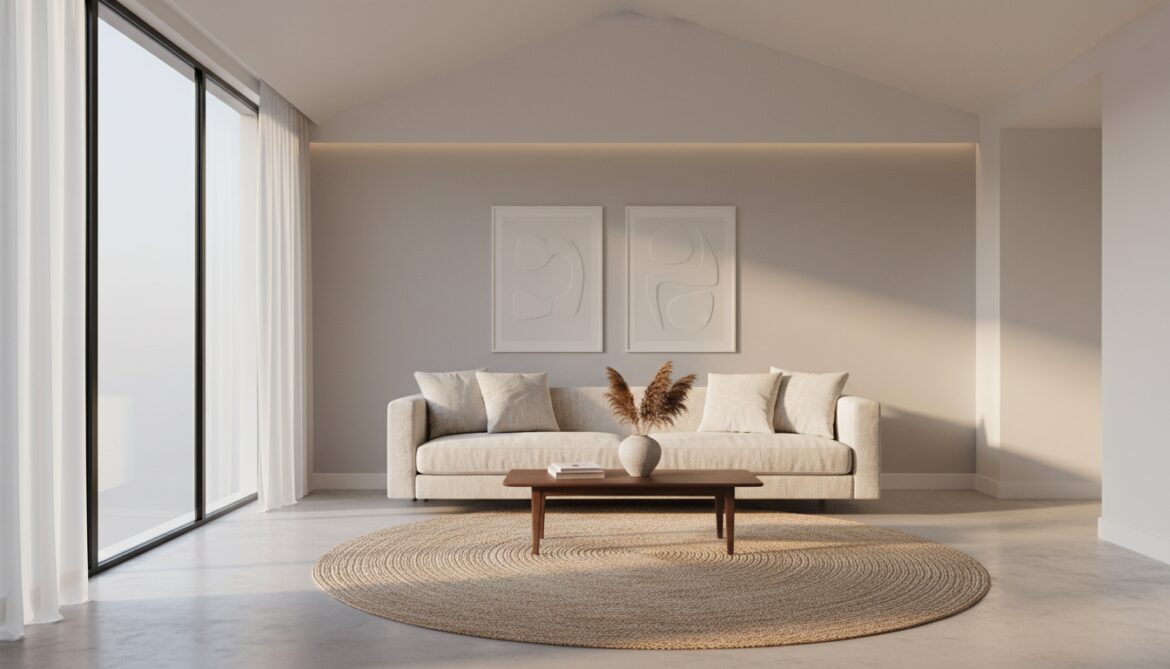
I have a confession to make, and it might offend some of you who think maximizing square footage is the holy grail of apartment living.
I absolutely despise the “Wall Hug.”
You know exactly what I’m talking about. It’s that default, panic-induced layout where every single piece of furniture—the sofa, the armchairs, the bookshelf, the TV stand—is shoved violently against the perimeter of the room. It looks like the furniture is terrified of the center of the rug. It looks like a middle school dance where the boys are on one side and the girls are on the other, and the middle is an empty, awkward no-man’s-land.
For fifteen years, I have walked into clients’ homes and felt my chest tighten because their living room looks like a dentist’s waiting room.
People do this because they think it makes the room look bigger.
It doesn’t.
It creates a “dead zone” in the center that serves no purpose other than to highlight how far away the coffee table is from the sofa. It highlights the void. Today, we are going to fix that.
The Physics of the “Float”
So, why does pulling your furniture away from the walls actually make a cramped space feel larger?
It seems counterintuitive. You are technically eating up walkable floor space by shifting heavy items inward.
But design isn’t about square footage; it is about perception and flow.
When you push a sofa against a wall, your eye traces the perimeter of the room and stops abruptly at the boundaries. You are telling your brain, “This is exactly where the room ends.” The corners get dark. The shadows stagnate.
By floating the furniture—even just a few inches—you create negative space.
Air flows. Light hits the baseboards behind the upholstery.
Suddenly, the room feels like it has layers. It implies that there is space beyond the furniture, which is a psychological trick that screams “luxury.” Large, expensive homes rarely have furniture touching the walls. Mimicking that layout, even in a 600-square-foot rental, tricks the brain into seeing the space as grander than it is.
It turns a “room with stuff in it” into a “composed living area.”
How to Pull It Off Without Losing Your Mind
You might be sitting there looking at your tiny 10×12 living room, thinking I’m delusional.
“I don’t have space to float a sectional in the middle of the room!” you shout.
Calm down.
Floating doesn’t mean putting your sofa dead center like an island in the Pacific. It’s a spectrum. Here is exactly how to execute this without making your home unnavigable.
1. The “Micro-Float” for the Truly Tiny
If you are dealing with a shoebox, you don’t need a three-foot walkway behind the couch. You just need a gap.
Pull your sofa three to four inches away from the wall.
That is it.
Just that tiny gap creates a shadow line. It stops the visual “flatness” of the furniture merging with the drywall. This is particularly effective if your walls are uneven or your baseboards are chunky. It lets the room breathe.
This also forces you to stop using the wall as a crutch for sagging cushions.
2. The Anchor Rug is Non-Negotiable
If you float furniture without a rug, you just have a furniture shop floor.
The rug is the raft.
All your floating pieces need to have at least their front legs on this rug. This physically connects the “floating” items so they feel like a cohesive unit rather than debris scattered after a shipwreck.
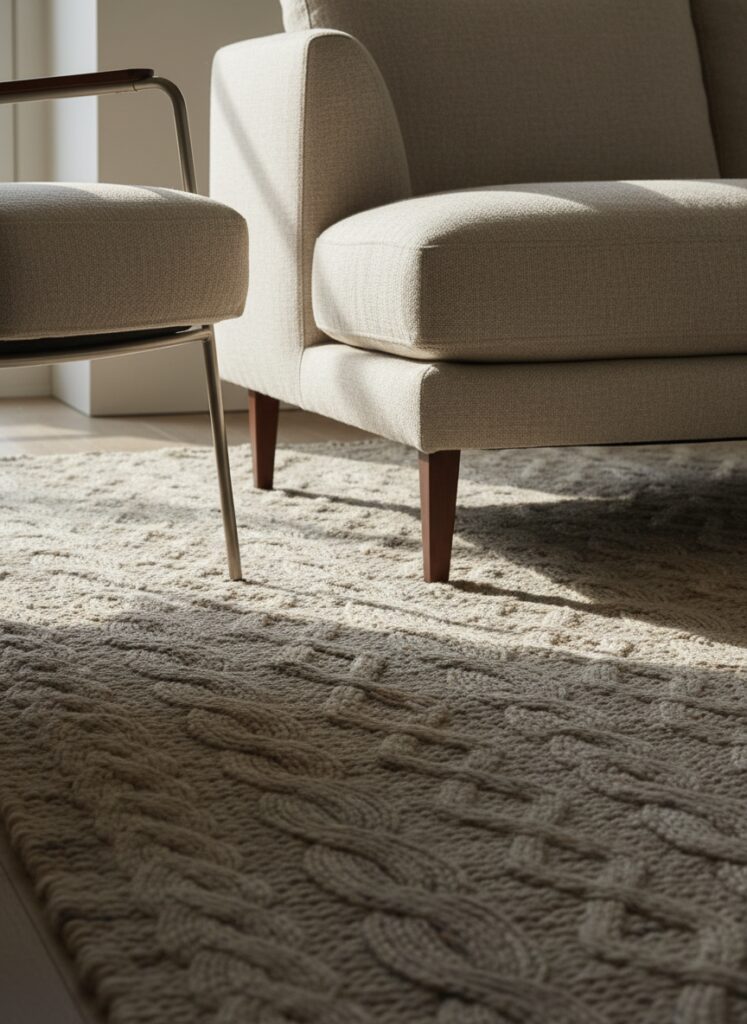
If you have a studio, this is the most aggressive way to define your “living” zone separate from your “sleeping” zone. You aren’t just placing furniture; you are building a room within a room.
For more about this topic, read: Studio Apartment Micro-Zoning Layout Tips
3. The Console Table Barrier
This is my favorite trick for those of you dealing with the awkward “front door opens directly into the living room” nightmare.
Float the sofa so its back faces the entry door.
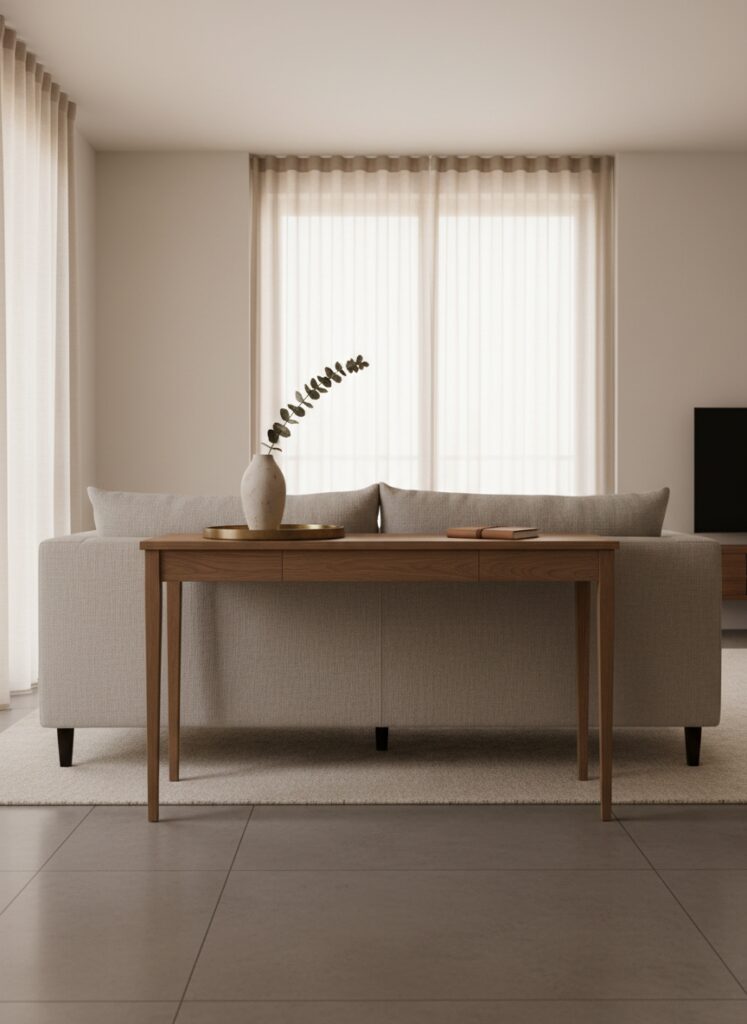
But don’t leave the back of the sofa exposed. Most sofas—unless you spent a fortune—have ugly backs. They look unfinished.
Place a skinny console table behind the floating sofa.
Now, you have a surface for keys and mail (solving the entryway problem), and you’ve visually blocked the view of the Netflix screen from the pizza delivery guy. You have created a hallway where one didn’t exist.
For more about this topic, read: Fake Entryway Living Room Ideas
4. Lighting the Void
Here is the logistical headache nobody warns you about: cords.
When your lamp isn’t near a wall outlet, you have a problem.
If you float an end table with a lamp next to your floating sofa, do not let an ugly black extension cord snake across your beautiful rug. It looks messy and cheap.
You have two options.
First, run the cord under the rug. You might feel a bump, but it’s better than the visual clutter.
Second, embrace the battery-operated revolution. There are incredible rechargeable bulbs now that fit into standard lamps. This solves the issue entirely and keeps the look clean.
If you opt for floor lamps, consider an arc lamp that sits in the corner (utilizing that dead wall space) and reaches over to the floating seating area. It creates a ceiling of light that further defines the zone.
5. What to Do With the Now-Empty Walls?
This is where the magic happens.
Since you stripped the furniture off the walls, you have blank canvases.
This is prime real estate for vertical storage that doesn’t encroach on your seating comfort. Tall, shallow bookshelves can line the wall behind the floating sofa. Because the sofa is pulled forward, you don’t feel like the books are looming over your head.
Or, go for the optical illusion.
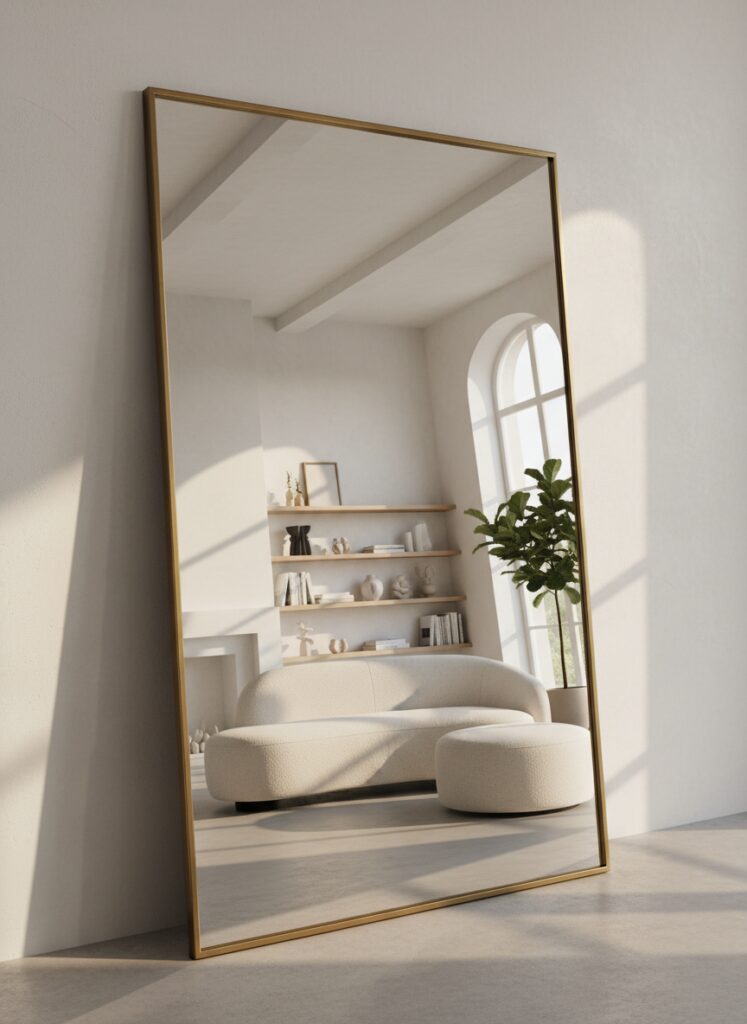
Place a massive floor mirror on the wall behind your floating seating arrangement.
Because there is a gap between the furniture and the mirror, the reflection captures the back of the sofa and the distance, doubling the perceived depth of the room. It’s a classic smoke-and-mirrors tactic, literally.
For more about this topic, read: Mirrors to Make a Small Room Look Bigger
Where People Mess This Up
I see people try this trend and fail miserably because they lack commitment or spatial awareness.
Don’t be like them. Avoid these three disasters.
The “Obstacle Course” Layout
Floating is great, but flow is king.
If floating your armchair means you have to turn sideways and suck in your gut to get to the kitchen, you have failed.
You need a minimum of 30 inches for a walkway. If you don’t have it, don’t force a full float. Stick to the “Micro-Float” I mentioned earlier. Functionality always beats aesthetics. If you are bruising your shins on a coffee table because everything is squeezed into the center, push it back.
The “Leggy” Look
If your sofa has tall, spindly legs, and your armchairs have spindly legs, and your coffee table has spindly legs, and you float them all… your room looks nervous.
It looks like a collection of spiders.
When floating furniture, you need weight. You need an anchor.
If the sofa floats, it should ideally be somewhat solid or skirted to ground the arrangement. If everything is lifted off the floor and pulled off the walls, the room feels unmoored and anxious. Mix heavy pieces with light pieces.
Ignoring the Back View
I touched on this with the console table, but it bears repeating.
Do not float a piece of furniture that looks like garbage from behind.
Recliners are notorious for this. They often have flaps of fabric, exposed mechanics, or weird zippers on the back. If you float that in the middle of a room, that ugly mechanism is the first thing guests see.
If you must float an ugly-backed chair, drape a throw blanket strategically, or position it at an angle so the back isn’t the focal point of the room’s entry.
Use Your Corners
Just because the main furniture is floating doesn’t mean the corners of the room should be barren wastelands.
This is where you put the things that don’t need to be part of the conversation circle.
A lonely corner behind a floating sofa is the perfect spot for a large potted plant (adds height and life) or a dedicated reading nook with a small side chair that is angled into the corner.
This creates layers.
Foreground (floating sofa), Mid-ground (plant/lamp), Background (wall art).
Layers make a small box feel like a designed home.
Just Try It
You don’t need to buy anything to test this.
Right now, put your phone down. Stand up. Go to your sofa.
Grab one end. Drag it six inches away from the wall. Then drag the armchairs in to tighten the circle.
Does it feel weird? Probably. You aren’t used to it.
But sit down. Look around. Notice how the light hits the floor behind the couch. Notice how intimate the conversation area feels now that you aren’t shouting across a cavernous rug.
Living rooms are for living, not for lining up furniture for inspection.