
I used to look at glossy design magazines and feel a deep, burning rage.
You know the photos I’m talking about. The ones where a “family of four” lives in a pristine, white box with absolutely zero stuff on the counters. Where are the bills? The half-finished Lego projects? The blender that didn’t fit in the cabinet?
It’s a lie.
After fifteen years in this industry, I can tell you that “minimalism” isn’t about owning less stuff. It’s about hiding your junk better.
Most people look at their floor plan and panic because they ran out of square footage. They try to shove everything into low dressers or under the bed, creating a knee-level obstacle course that makes vacuuming a nightmare. You are ignoring the most valuable real estate in your home.
Look up.
Your walls are vast, empty deserts waiting to be colonized. But—and this is a massive “but”—if you just start nailing things to the wall willy-nilly, your home won’t look organized. It will look like a garage sale exploded.
The Theory of Vertical Gravity
Here is the problem with most wall storage: visual weight.
When you put a heavy, dark cabinet at eye level, the room feels smaller. It feels like the walls are closing in on you. The trick is to trick the eye into thinking the storage is part of the architecture, not just a box screwed into the drywall.
Think of your wall as a timeline. The bottom third is for heavy, grounding items. The middle third is for active use. The top third? That is for display and things you only need once a year, like the holiday platter your mother-in-law gave you.
If you violate this order, you create chaos.
10 Ways to Master Verticality
Let’s get into the actual tactics. These aren’t just “buy a shelf.” These are systems.
1. The “Floor-to-Ceiling” Illusion
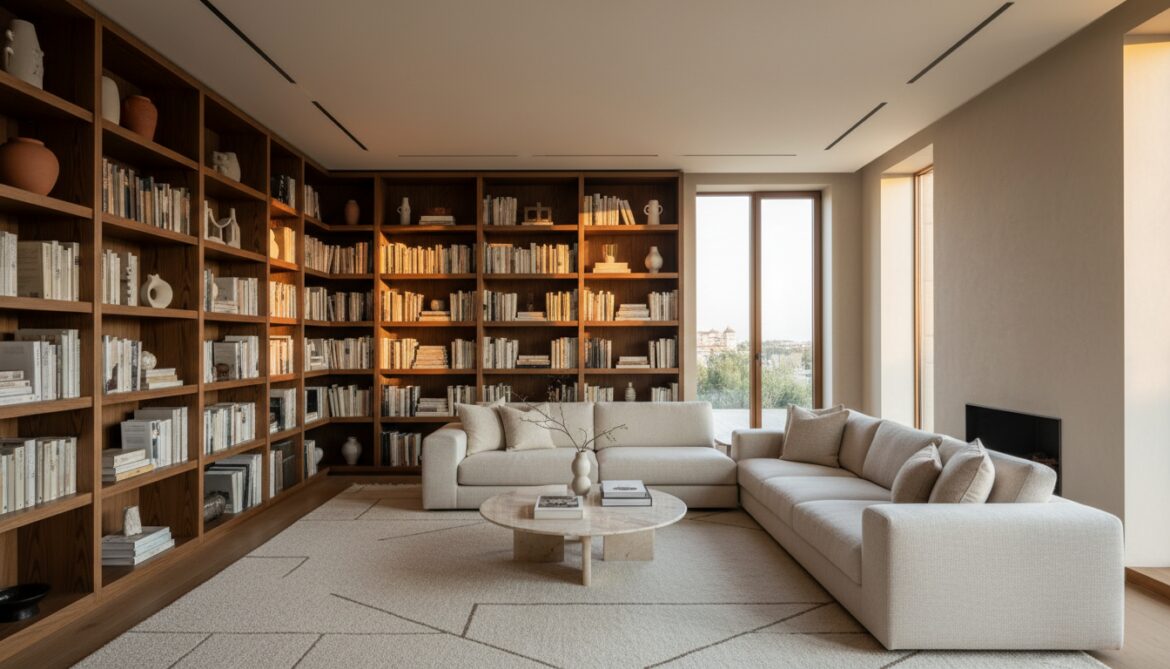
If you have a small room, buying a short bookcase is the worst thing you can do. A short bookcase cuts the wall in half, creating a visual horizon line that makes the ceiling feel lower.
You want tall. Extremely tall.
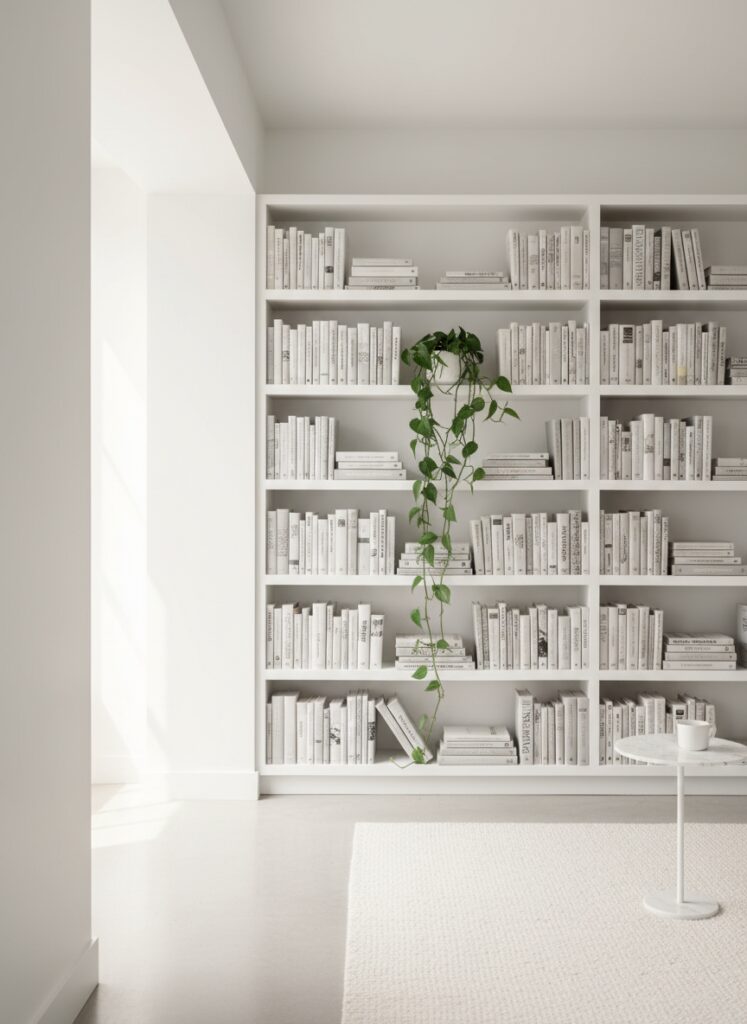
Get shelving that goes all the way to the crown molding. If you are renting and can’t do built-ins, buy tall IKEA bookcases and mount them side-by-side. The vertical lines draw the eye upward, making the room feel expansive rather than cramped. It turns storage into a texture.
2. The Fake Entryway Drop Zone
I see this constantly in apartments where the front door opens directly into the living room. You walk in, and boom, you’re on the sofa. There is no transition. It feels exposed.
For more about this topic, read: Fake Entryway Living Room Ideas
You need to manufacture a foyer.
Use a narrow, vertical slice of wall right next to the door. Install a vertical row of heavy-duty hooks—not just one horizontal row, but two. One high for coats, one low for bags. Below that, a floating shelf or a slim shoe cabinet. This creates a dedicated “mudroom” zone that is only 12 inches wide. It creates a psychological separation between “outside” and “inside” without building a wall.
3. Recessed Medicine Cabinets (They Aren’t Just for Bathrooms)
I know, the phrase “medicine cabinet” makes you think of 1990s builder-grade beige bathrooms. Forget that.
Modern recessed cabinets are sleek. I have used these in hallways and even kitchens. If you can cut into the drywall (homeowners, I’m looking at you), you can steal 4 inches of depth from the stud bay.
Flush-mount a mirror over it. Mirrors are the oldest trick in the book for expanding space, bouncing light around like a pinball. But when that mirror opens to reveal six shelves of spice jars or toiletries? That is efficiency.
4. The High-Perimeter Shelf
This is a risky move, but when it pays off, it pays off huge.
Run a single shelf around the perimeter of a room, about 12 to 18 inches below the ceiling. This is perfect for books, collections, or boxes of off-season gear.
The warning: You must keep this tidy. If you just shove random cardboard boxes up there, your house will look like a warehouse. Use uniform bins. Identical white boxes or matching wire baskets. Uniformity creates calm.
5. Magnetic Knife and Spice Strips
Counter space is gold. Why are you wasting it on a giant wooden block for your knives?
Get magnetic strips. But don’t stop at knives.
You can buy magnetic tins for spices and stick them to a metal sheet mounted on the backsplash or the side of the fridge. This clears an entire cabinet shelf. Just make sure the lids are tight. I once had a turmeric disaster that stained my grout yellow for three years. Learn from my pain.
6. The “Clean” Pegboard
Pegboards belong in the garage, right? Wrong.
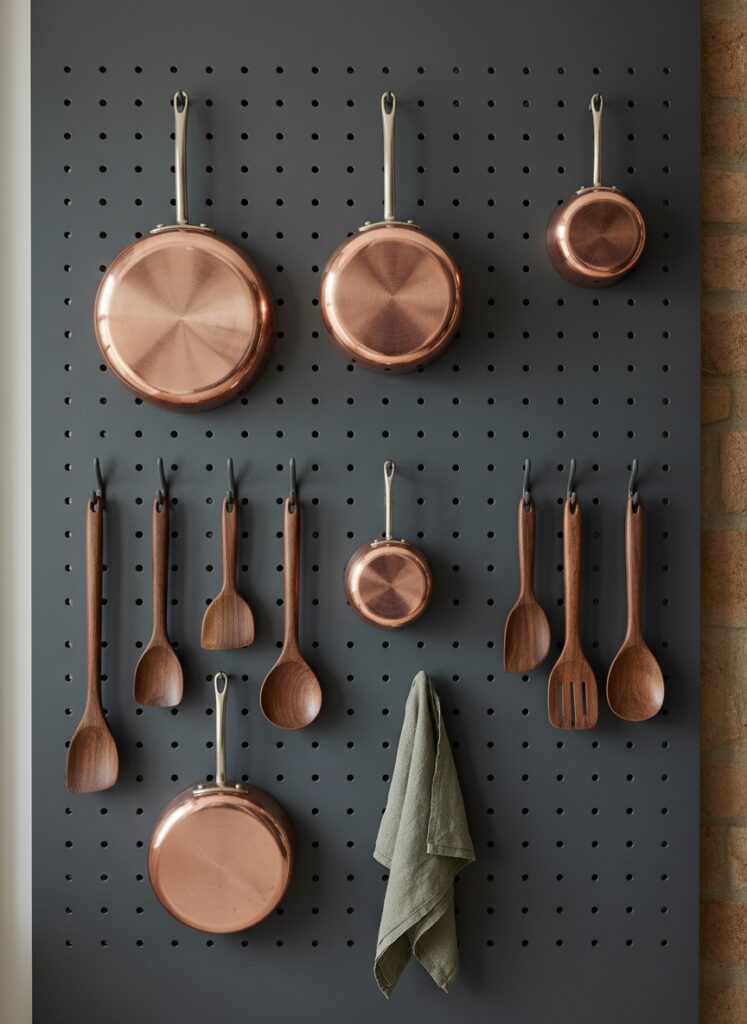
A painted pegboard in a kitchen or home office is incredibly functional. The key to avoiding the “workshop” look is monochromatic color. Paint the pegboard and the hooks the same color as the wall.
Suddenly, it’s not industrial; it’s sculptural. You can hang pots, pans, scissors, and baskets. It adapts to your life. If you buy a new ladle, you just move a peg. No drilling new holes.
7. Wall-Mounted Sconces with Ledges
Lighting takes up table space. A table lamp needs a table.
Swap them for plug-in wall sconces. Even better, find the ones that come with a tiny integrated shelf. These make excellent nightstands for tiny bedrooms. You have a light and a spot for your phone and a glass of water, all floating on the wall. The floor underneath remains clear, which makes the room feel airy.
8. The Back-of-Door overhaul
Most over-the-door organizers are flimsy plastic garbage. They sag. They rip. They look cheap.
Invest in the rigid metal rack systems that screw into the door (or clamp tightly). Use these on the back of the pantry door for dry goods, or the linen closet for cleaning supplies.
This is “dead” space. It is invisible when the door is open. If you aren’t using the back of every single closet door in your house, you are throwing away storage.
9. Shallow Picture Ledges for Non-Pictures
I love IKEA Mosslanda ledges, but not for art.
They are the perfect depth for children’s books (facing forward, which makes kids want to read them), vinyl records, or cosmetics.
Install three or four rows of these on a blank wall behind a bedroom door. It sticks out maybe four inches. You can store dozens of items in a space that would otherwise be useless because a normal cabinet would block the door swing.
10. Textile Wall Pockets
Sometimes, you need softness. Hard shelves can make a room feel sharp and cold.
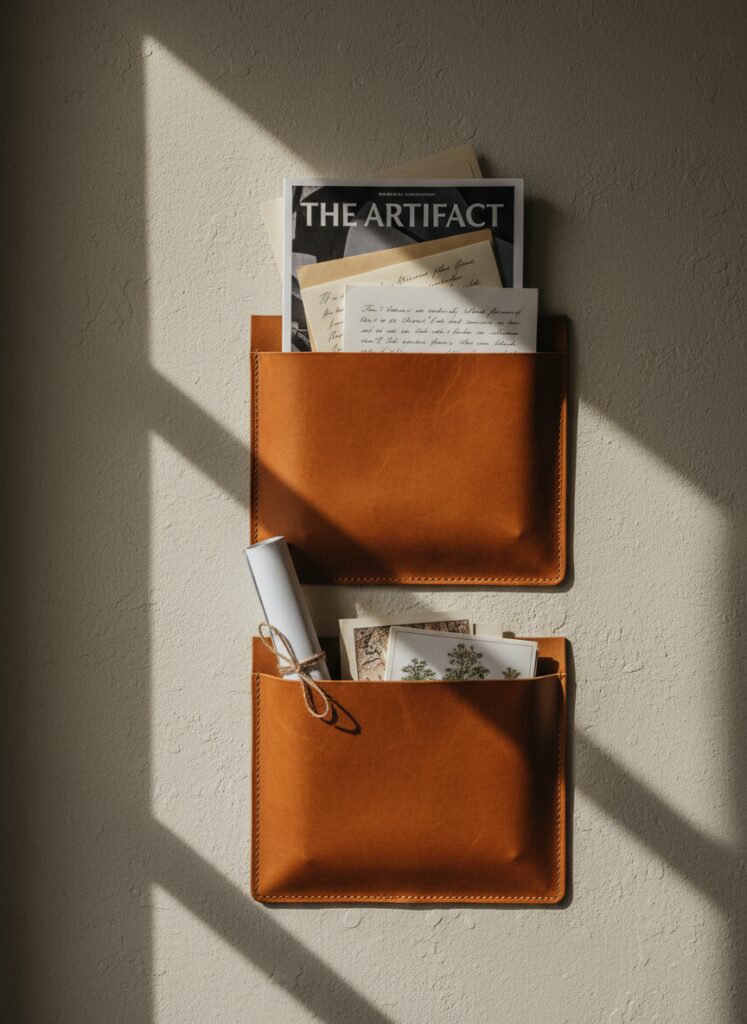
Look for structured wall pockets made of felt, leather, or thick canvas. These are great for entryways (sorting mail), kids’ rooms (stuffed animals), or beside the bed (magazines). They add texture and warmth while swallowing clutter.
Plus, unlike a shelf, if you bump into it, it doesn’t hurt.
Where People Get It Wrong
You can have all the right gear and still ruin the vibe. Here are the three ways I see people fail at vertical storage.
The “Clutter Museum”
Open shelving is not for storage; it is for styled storage.
If you put your ugly branded cereal boxes and a tangle of charging cables on an open shelf, you have just put your mess on a pedestal.
If the item is ugly, it must go in a basket. If the basket is on a shelf, it must match the other baskets. This is the “styling tax” of open shelving. If you are not willing to pay the tax—if you are not willing to decant your pasta into glass jars—put doors on your shelves. Be honest with yourself about how tidy you actually are.
The Head-Banger Zone
Depth matters.
I once walked into a client’s kitchen where they had installed 12-inch deep shelves right next to the sink at eye level. I almost concussed myself washing a spoon.
Keep storage shallow in high-traffic zones. Above the waist, stick to items that protrude less than 8 inches unless they are over a piece of furniture (like a sofa or buffet) that keeps your body away from the wall.
The “Too High” Syndrome
If you need a ladder to reach your daily vitamins, you aren’t going to take your vitamins.
Be realistic about your height. Keep the “active zone”—between your waist and your eye line—reserved for things you touch every day. The high stuff is strictly for long-term storage. Do not put the coffee filters on the top shelf. You will regret it at 6:00 AM on a Monday.
Go Drill Some Holes
Vertical storage is the difference between a house that feels like a storage unit and a house that feels like a home. It allows you to keep the things you love without tripping over them.
Look at your walls. There is space there. Claim it.
Just please, for the love of design, use a level. Nothing ruins the effect faster than a shelf that looks like it’s sliding into the ocean.